By Leroy Adams
Nicole Banister rolled her ankle at a gym in Los Angeles a few weeks ago. She had a trip to Morocco already on the calendar, so she waited. In Morocco she got three X-rays, two appointments and medicine. The total was $150. "No insurance, no nothing," she told me.
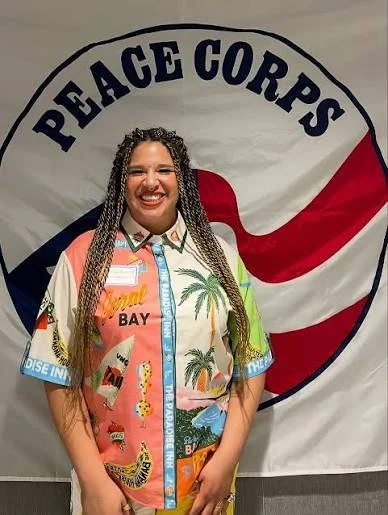
Nicole Bannister
Banister, a Peace Corps alum who spent 13 years in South Africa and has visited more than 50 countries, did not turn that bill into a talking point. She turned it into a question. "It's really hard to continue to sit here and believe that America, United States of America, is the greatest country on Earth," she said, "when the basic needs of its citizens are not being met."
That question is the reason for this story. Black Americans are traveling more than ever, to Ghana and Lisbon, Medellín and Marrakech. They come home with photos and food recommendations, and also with a new yardstick. Healthcare, schools, policing, the way a news broadcast covers a war: once you have seen another way of doing it, it is hard to unsee.
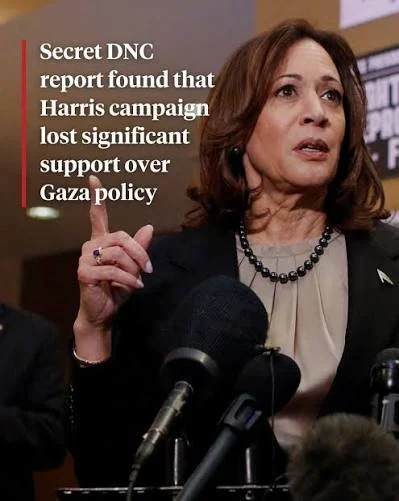
Photo courtesy of Axios
It is also where this story began. In the last presidential election, between Vice President Kamala Harris and President Donald Trump, events far from home pressed on voters in ways they rarely had before. The war in Gaza, which many people, including some we spoke with, call a genocide, was one. The humanitarian crisis in Sudan was another. So was the war between Russia and Ukraine. Social media and personal travel brought these conflicts into daily life, and for many Black travelers they were not abstract. Many have walked those streets or know people who live there. Gaza in particular has been widely discussed, if rarely acknowledged in public, as a factor in how voters showed up, or didn't, for Kamala Harris. This story asks what that exposure looks like for Black Americans who have seen the world up close.
WHAT HISTORY TEACHES US
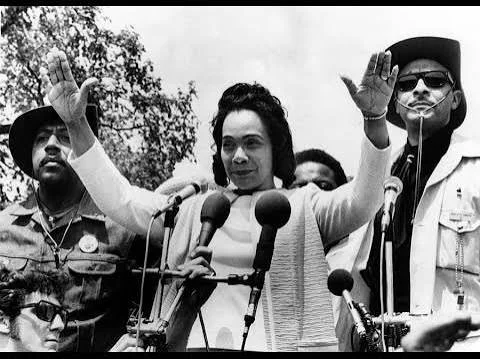
This is not the first time the connection between the ballot box and global conflict has fractured Black political life in America. In the mid-1960s, during the Vietnam War, Coretta Scott King was one of the most visible and outspoken critics of President Lyndon B. Johnson’s Vietnam policy. Several civil rights leaders did not want to antagonize a president who had just delivered landmark legislation, and they questioned why anyone would risk it. Among them were Roy Wilkins, executive director of the NAACP, Whitney Young of the National Urban League, and the strategist Bayard Rustin. At first, her husband, Dr. Martin Luther King Jr., held back as well. For them, the issues facing Black Americans at home came first.
Coretta saw it differently. Dr. King had written in 1963 that “injustice anywhere is a threat to justice everywhere,” and she applied that principle to Vietnam. For her, the struggle there was bound up with the violence Black Americans knew at home.
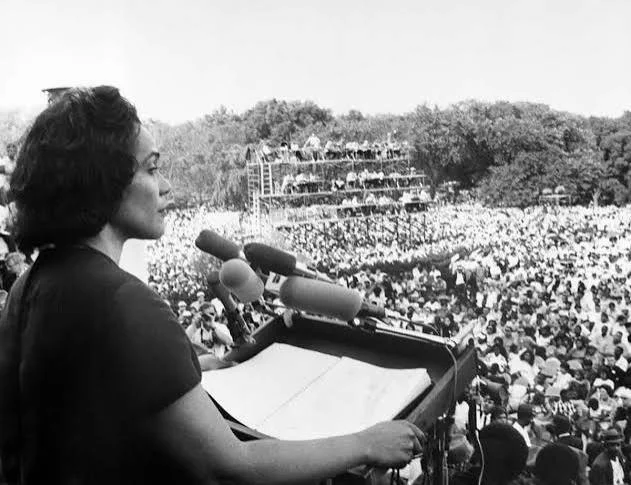
In the 1960s, Black America’s response to Vietnam showed that global conflicts, particularly in Black and Brown countries, could not be separated from the fight for freedom and equal rights at home. Today, a new generation of Black travelers is saying the same thing. This time, Gaza, Sudan, the Congo, and other global conflicts are their measuring stick.
We do not know yet what that means for American politics, and this story does not tell you how to vote. It asks how a growing group of Black travelers is shaping the conversation. As the midterms take place today, we talked with three of them about what changed, and what hasn't.
A LONG TRADITION
None of this is new. Maya Angelou lived in Ghana. W.E.B. Du Bois ended his life there. Malcolm X went to Accra in 1964 to build bridges with African leaders, and James Baldwin spent much of his life in France. For generations, Black Americans have carried what they learned abroad back into the fight at home. What is new is the scale. A passport is more within reach than it has ever been, and every trip is posted in real time. Scenes that once reached a few people in a salon now reach a whole timeline. Our three sources are part of that lineage, whether or not they would use the word.
BEFORE THE PASSPORT: “My role was to vote”
Both women describe an earlier version of themselves whose politics stopped at the border.
Banister says that before she traveled as an adult, "I thought that my role in American politics was just to vote. Plain and simple." She protested in Washington while in college and imagined running for office someday.
Martie Bowser, a journalist who owned a PR agency for 14 years, says her first election was Barack Obama's. It gave her what she calls "rose-colored glasses." It also taught her to look past the White House to local government. But her politics were still American-only. "I hadn't connected what happened outside of America to what was affecting me in America," she said.
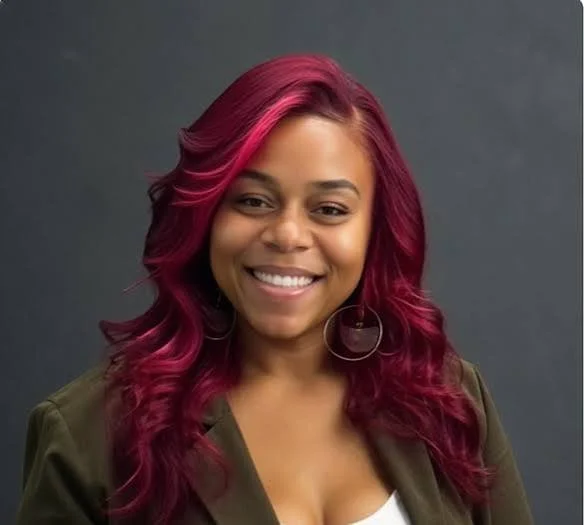
Marite Bowser
Rafael Pena is the exception. A New York journalist whose family migrated from the Dominican Republic, he says politics never sat apart from his life. "I was always interested in politics, always," he said. It started as curiosity about "why are my circumstances the way they are," and when he looked back along that chain, he said, he saw that "politics have everything to do with where Black and Brown people live, how they make money, why they're able to have homes in one section of the country, as opposed to this other section." Travel did not wake him up. It gave him, in his words, an "infinite" number of new questions..
SEEING HOME FROM THE OUTSIDE
The first shift they describe is practical, not ideological. They saw other countries do the things Americans are told cannot be done.
Bowser got sick on her second day in Ghana. She was treated at a clinic that, she noticed, offered free preventive care to residents. "I got the best care ever," she said. Back in the U.S. she went straight to an ER, where she was offered stronger painkillers than she needed. "It started me to think, I'm like, that's why everybody here is addicted to something." Healthcare and education, she says, are where it becomes clearest "how they're playing in our face here."
For Banister the comparison is the $150 in Morocco. She also points to something bigger: colleagues from Canada and Australia open meetings by acknowledging the Indigenous land they are on. "I have never, ever once in the United States heard a call where someone began the call honoring or acknowledging the Indigenous land that we sit on." None of it, she says, is something she "would have known had I not traveled."
The two women are careful not to romanticize abroad. Bowser notes that Canada's free healthcare comes with long waits, and she says she would need to see the outcomes data before praising any system. What she keeps is the question. "That can actually be implemented," she said of the mental health facilities she studied in Canada, which she described as looking like apartments. "It can be done."
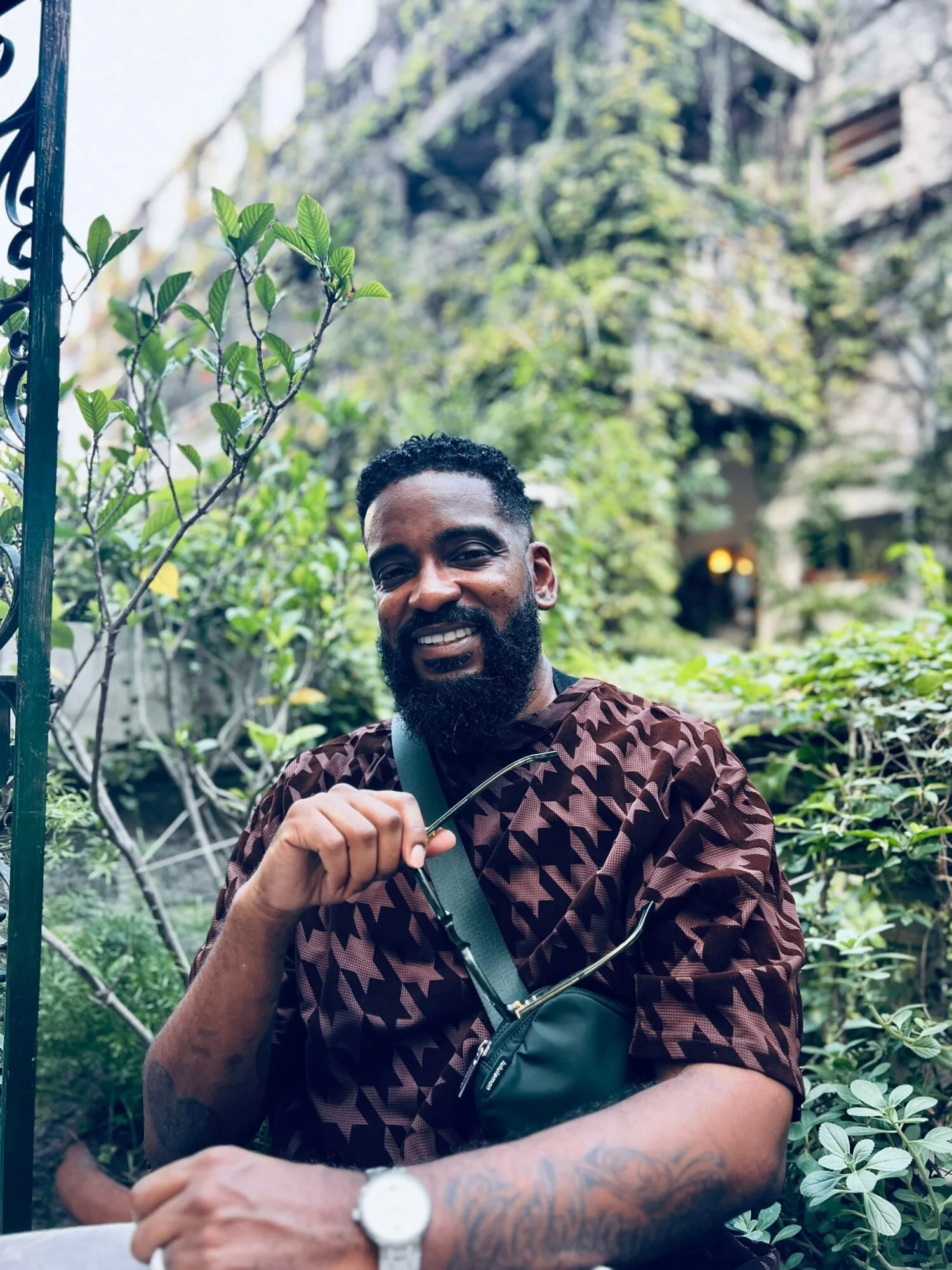
Rafael Pena
Rafael Pena's comparison is Bangkok. New York, where he grew up, has about 8 million people, he said, and Bangkok is similarly populated. But "you rarely see any kind of wild crime," he said. "You rarely even see police." Back in the U.S., "all I see is police. All I see is violent crimes," which "makes you question again, well, what is the root of this?"
He says travel also corrected a stereotype he absorbed growing up. U.S. coverage of Muslim-majority countries, he said, left him picturing people "that want to be martyrs and have bombs strapped to their chests." Then he reached Kuala Lumpur. "I get to a predominantly Muslim country, and it feels like one of the safest places in the world," he said, adding that he sometimes felt less safe walking in San Francisco.
YOUR VOTE EQUALS ACCESS, OR NOT
Pena's other lesson was about access. On a trip from Kuala Lumpur to Vietnam, he learned he needed a visa after the tickets were bought. He walked an hour in the heat to the Vietnamese embassy to ask for a workaround. "They weren't trying to hear anything American," he said. "Forget what you think about your access as an American... No matter how kind you are, or how nice you can be, the rules are the rules."
He says the climate has changed in his roughly 10 years of travel. Some countries have stricter visa rules, and some, he said, are answering U.S. policy in kind: "Your country's doing this to us, now we're gonna do this to you." He now checks whether he can actually go somewhere, and he says that coming home can bring extra questions. "You're flying to JFK, and because you went to Egypt, they got 20 more questions waiting for you." That is why he argues that voting matters even from abroad. "Even if you left the country, it is important to vote as well," he said. "If you are a traveler, more than likely, you should be voting for people that can create this kind of access, this kind of atmosphere where the political heads of different countries feel comfortable accepting the American dollar, or accepting American tourists."
HOW THE NEWS LOOKS DIFFERENT
Most travelers when returning home often share how their news preferences have also changed. Banister says she now gets most of her news from the BBC and Al Jazeera, not U.S. outlets. "When you're living and working and existing exclusively in the United States," she said, "it feels really difficult to feel connected to conflicts, tensions, wars." Once the places and people are real to you, she said, those stories stop being distant.
Bowser describes a trip to Jamaica after a hurricane. American coverage, she said, made it seem as if the whole island was destroyed. "Kingston was fine." She sees a pattern in coverage of places that Black travelers visit. "It's subconscious fear-mongering," she said, "that is keeping people from wanting to go to these places to see the truth."
She also describes learning to "look at the root versus the leaf." Wars and crises that once felt far away, she said, now prompt a question about their causes and about what the U.S. had to do with them. "It made me care about the roots of these things."
Pena is blunt about why. A person who isn't a world traveler, he said, puts on the news and "it's entertainment. It's not informative," because the outlets compete for attention and may take "a news story that could be like 60% true" and turn up the drama. On the ground, he said, it can look different. What travel gave him, he said, is "some bit of discernment. You understand how to decipher what the real news is."
AT THE POLLS
This is where the stories diverge, and where they are most honest.
Banister says the war in Gaza was one of the most important factors in her 2024 vote. She says it will shape how she votes in the midterms. "If you're going to spend my tax dollars on arming a country that is actively exterminating people," she said, "then you've made it my business."
Bowser's path was less direct. She had researched conflicts in Congo and Sudan, she said, but felt she lacked the background to speak confidently about Israel and Gaza. What reached her was how those events were being handled at home. Her views, she said, "definitely affected the conversation," and she stepped back from certain social gropups for a time because her views did not line up with the group's. "I don't follow groupthink," she said.
Pena asks voters to look past labels. Raised in New York, he said his family's politics followed who they felt was helping them, partly because they "didn't have the tools or resources to dig deeper." Now, he said, "you can't really pay attention to this group is this, and this group is that. Now you really have to pay attention to the individuals," and to what they have done. He is wary of red-and-blue shorthand: "You'll vote blue, and you'll be going through some red things, and vice versa." And he puts the work on both voters and the press: "It's our job as people, as Americans, to just dig in a little deeper, and then it's our job as journalists to provide that knowledge."
We asked none of them whom they voted for. We asked what they saw abroad that shaped how they showed up. Their answers differ, and that is part of the point. There is no single "travel vote." There is no single “Black vote.” There is a group of voters who bring a wider frame to a ballot.
HOPE, AND IT’S LIMITS
Asked whether travel has left them hopeful or disillusioned, Banister gave two answers. About the world she is an "eternal optimist." About American democracy she said, "I feel very disillusioned." Her hope lives in a few figures she sees building bridges across cultures. She named Barack Obama, New York Mayor Zohran Mamdani and the YouTuber IShowSpeed, whom she credits with doing "more for American soft power" in five years than "any single president, politician, ambassador, influencer."
Bowser's hope is more of a prescription. She wants people to go and look, especially people who have not. "There's strength in going beyond what's being given to you," she said. "Travel equals knowledge. It opened our eyes to stuff that probably, definitely affects how we vote."
CLOSING AND QUESTIONS FOR READERS
Travel does not hand anyone a party or a candidate. Banister, Bowser and Pena reached the ballot by different roads, and each is open about the limits of what they know. What they share is the habit of asking what else is possible. Why does a clinic in Accra offer free preventive care? Why can a trip to Morocco cost less than an urgent-care visit at home? Why do people in Kingston, Singapore or Cape Town see the U.S. so differently than the broadcast does at home?
There is also a responsibility in it. Banister puts it in a Spider-Man line: "With great power comes great responsibility." People who can travel, she argues, should share what they see, "because no one in the United States is going to turn on the TV and see it."
As Election Day arrives, a quieter question sits behind the headlines. If more of us travel, and the exposure that comes with it keeps shaping how we think, what happens to Black politics at home? Do we push the parties we know toward different priorities? Do we leave them? Do we build something new? Nobody we spoke with claimed to know. That seems right. The conversation is only starting.
Question for readers:
Has travel changed how you think about American politics, or how you vote? Tell us what you saw and what shifted, anonymously if you'd like. We might feature your response in the next issue of our print Black travel magazine.