By Leroy Adams
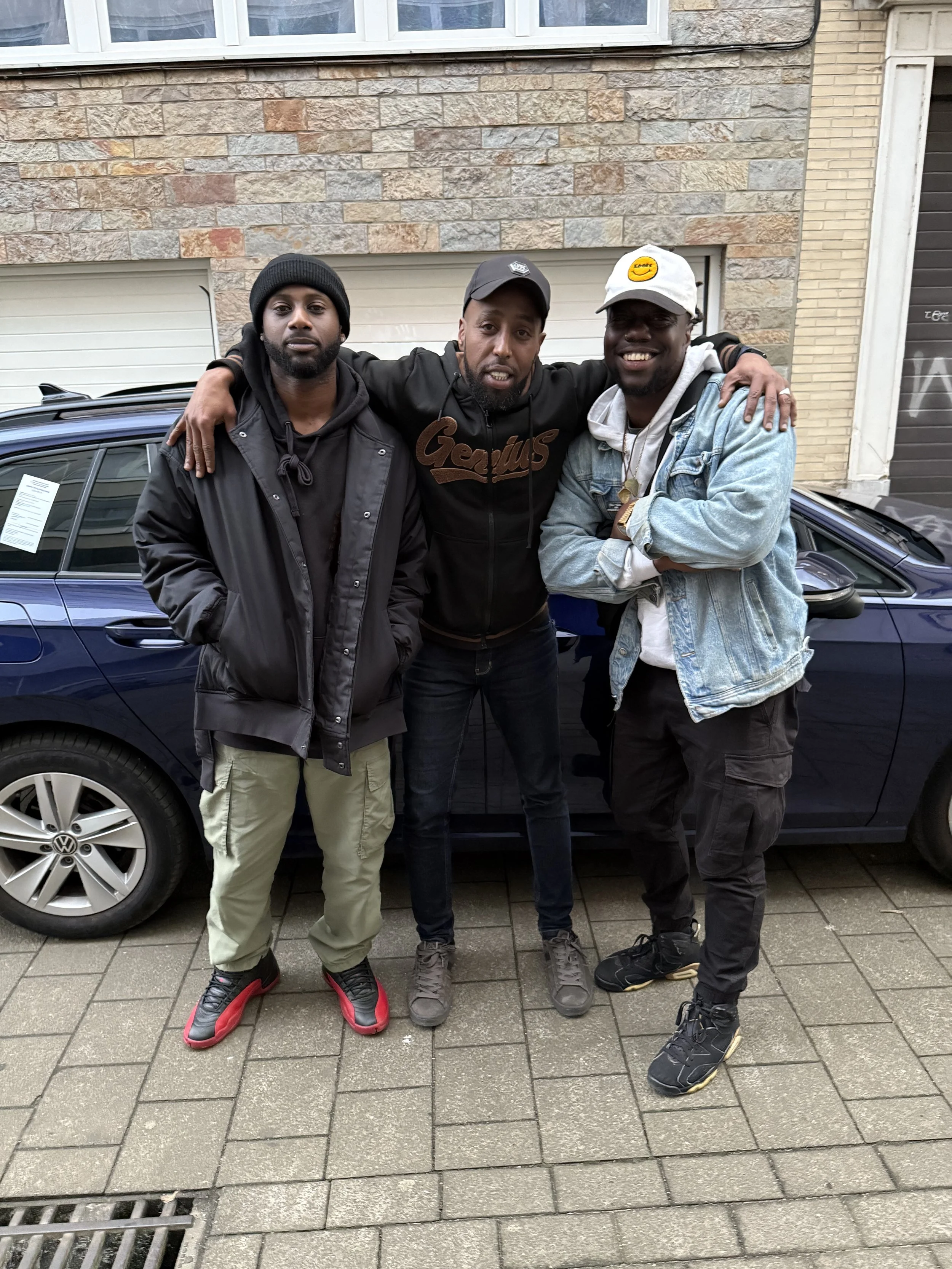
Ahmed pulled into the parking lot of Battle Karts with his blue Kia sedan. I could see him as he pulled in, staring down at his steering wheel—just another Uber ride through the streets of Ghent, he thought.
As he approached the building, he lifted his head to find the Black guy with locs styled behind his cap. This sight registered an immediate, "Ooooh bro, welcome!" from Ahmed who, just a second ago, was calmed by the minutiae of Uber driving, but would now be thrilled at the sight of a Black man.
His celebration only increased as he saw my friends—three additional Black passengers—approaching his car. His excitement rendered him incoherent, unable to form a single sentence, no doubt his mind fragmented by the presence of his new passengers. Ahmed, once he finally contained his excitement, explained why he reacted this way.
"Every day, at least 95% of the time, I'm driving White Europeans. They get in my car and curl up," he mimicked someone curling into a ball, "as if they're afraid to ride with me. I rarely get to drive Black people. Welcome to Belgium, brother!"
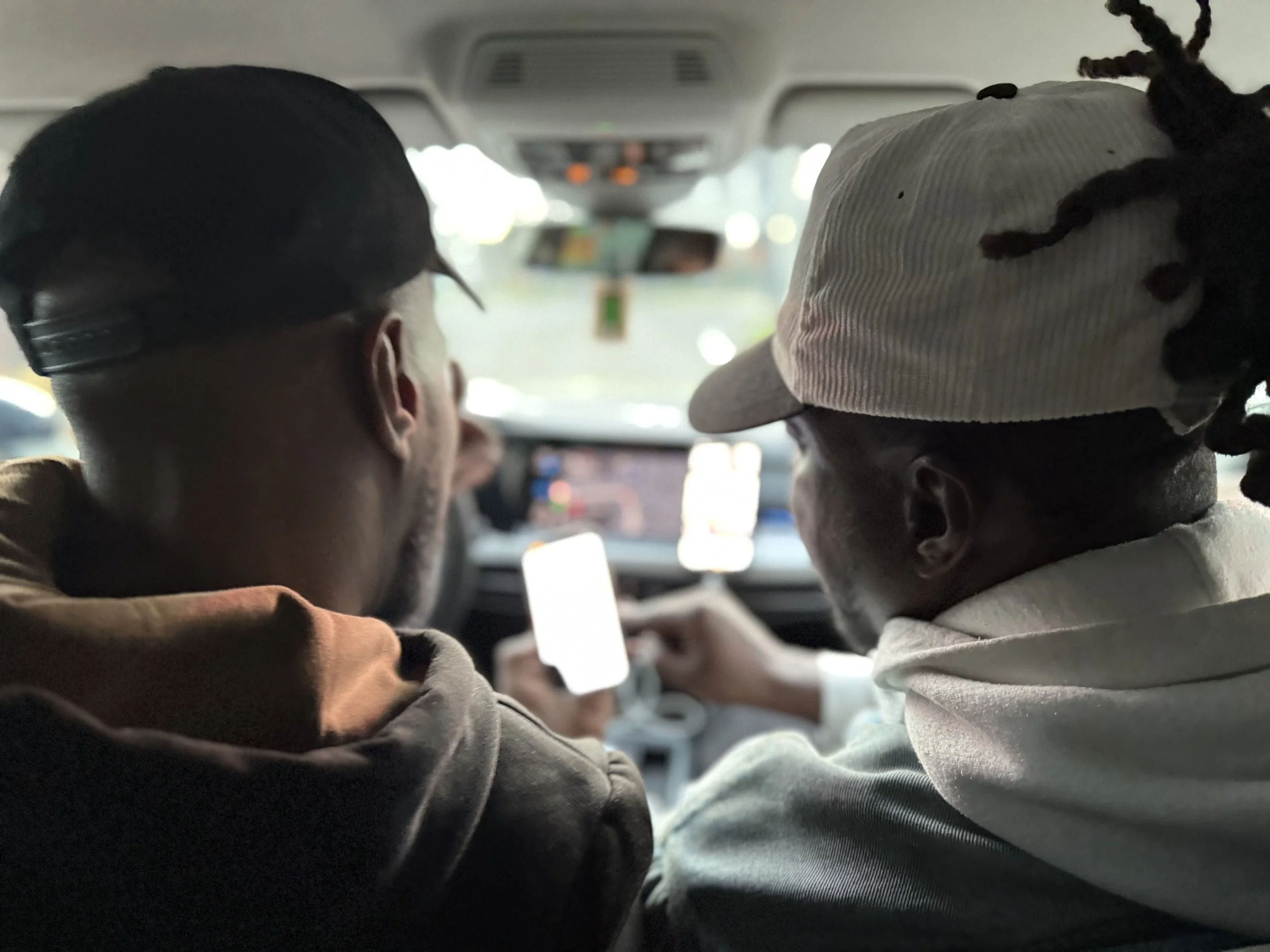
After I briefly shared that I'm a travel writer and that my friends and I were in Amsterdam for the Soulful Experience riverboat cruise to experience Black history and culture across The Netherlands and Belgium, Ahmed asked where we were from.
Here's where things got a little intense.
"The U.S.," I said.
This response angered him with passion. "No brother, no. Where are you from?!"
Before I could respond, he—like most non-Black Americans—did not wait for an answer but instead told me how he answers this question of identity. If I'm honest, this is always a sour point when meeting or talking with someone of the Diaspora who can trace their ancestry. It's not that we [Black Americans] don't care to know. We just don't.
"Bro, I always say Somalia," he said. "After what Belgium has done to Africa? Fuck them! I'm African, brother. Now, where are you from, bro?"
"I don't know."
A reminder of the gap within my identity.
Ahmed would not accept this as an answer. His insistence wanted me to say Africa—of course I knew this—but where? So I said, "I don't know, but maybe somewhere in East Africa. Ghana, perhaps?"
"Ok! That's what I'm talking about, bro."
Any association with white people would not be accepted.
After this, Ahmed again expressed his excitement to be driving us and asked me to select a song for the ride. He didn’t ask for a hip-hop or rap song, but, c’mon now. After navigating the phone settings that were in Arabic, I was able to find my way to YouTube, typed in 50 Cent, and played a hip-hop mix starting with "In Da Club."
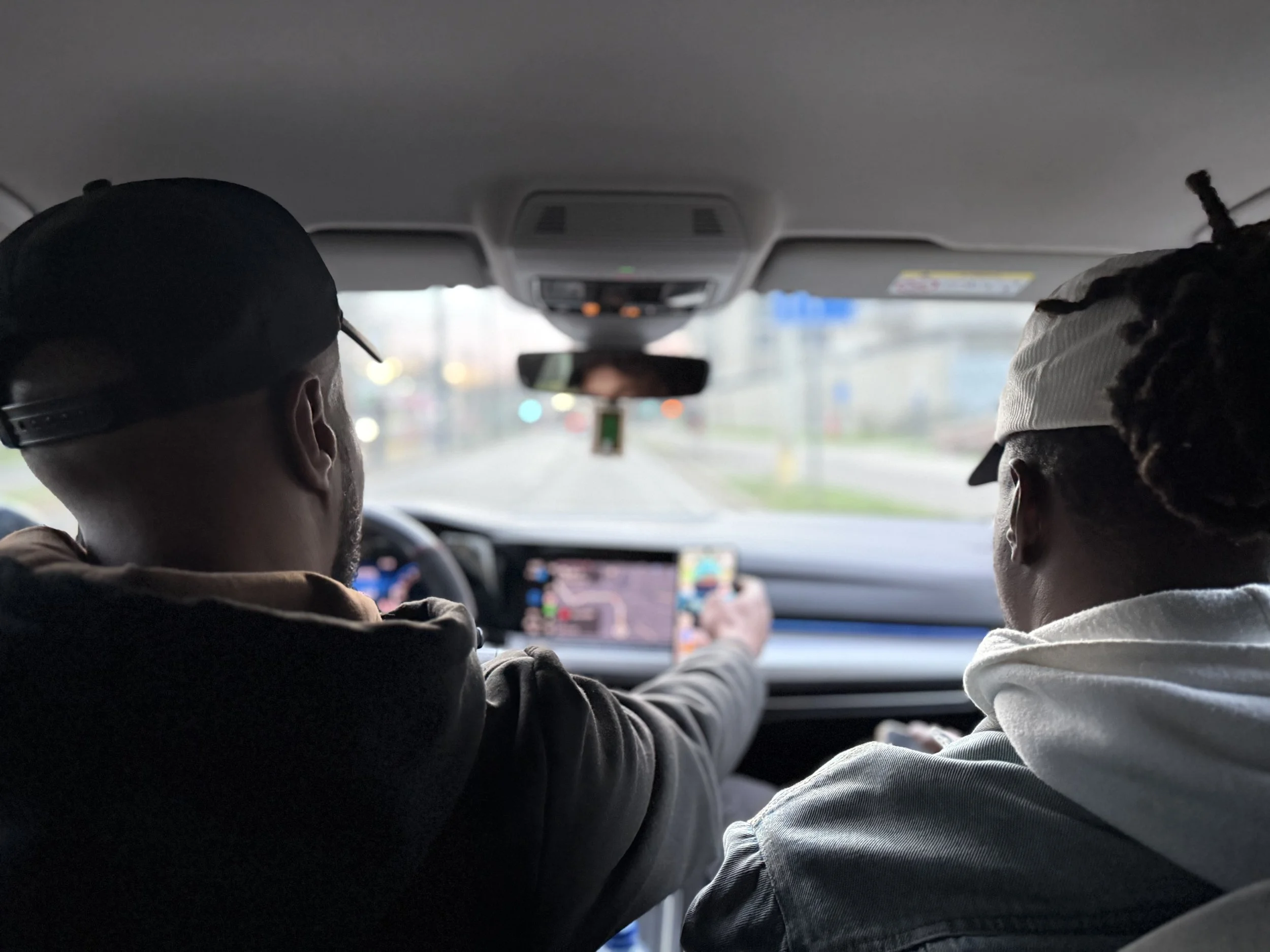
Ahmed erupts with laughter and joy while the rest of us bounce to one of the dopest opening beats ever. I will die on this hill.
As 50 Cent hangs from the ceiling doing sit-ups, Ahmed began his Trump tirade.
"Bro, fuck Trump. Do you know why I say this? Because he treats Somalians so badly. We're good people. Why does he say these mean things about us?"
His anger felt familiar, like mine when Black students and HBCUs were targeted after the Charlie Kirk killing. His anger was briefly replaced with sadness as he attempted, without stating it, to understand the reason behind the hatred. A shared experience across the Diaspora.
Still, Ahmed—having been to the U.S. before to visit a friend in New York—had not experienced American racism personally, only through social media videos of Somalians being harassed or verbally degraded by the most powerful person in the world. This would change when Ahmed attempted to visit his friend in New York and see a soccer game earlier last year.
Ahmed told the story of how he applied for a U.S. visa to visit his friend in New York and to see a football (soccer) game. He had been to New York a few times before, but this visa process would be different this time. Under the current administration, he would experience American racism as a Black person in Belgium.
Ahmed applied for a U.S. visa using his Somalian passport. His visa was denied.
Confused by the decision after never having a problem before, he applied again—but with his Belgian passport. His visa was approved.
Same person. But instead of a Somalian from Somalia, he was a Somalian who looked like he had been "civilized" in Europe amongst white people. Amongst the same society that would birth one of the most ruthless colonizers known to man, King Leopold II, who was responsible for the death of more than 10 million people in the Congo. Ahmed's passport experience was simply a reminder that racism makes no sense, and yet we suffer at the hands of it.
As we approached the end of our ride, Ahmed assured us that if we needed anything to call him and he would take care of us—food, parties, a ride, or weed.
His excitement to see us felt good. It hit the heart.
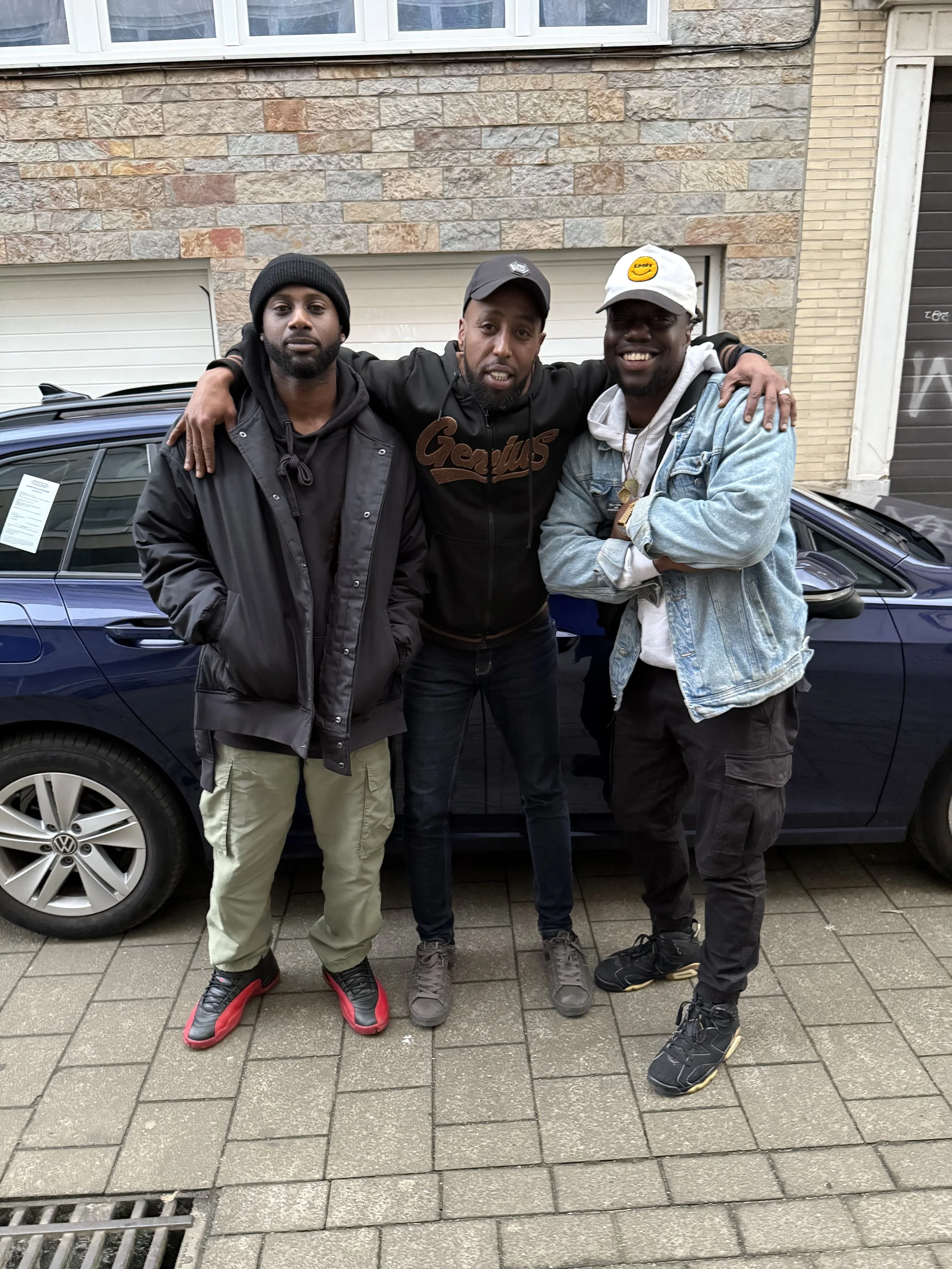
Before we left, I asked if he would take a picture with us to memorialize this moment and give him something to share with friends—proof, if you will, that four Black Americans from across the Atlantic drove in his car. Ahmed's smile stretched wider than it had all ride as we crowded together for the photo, brothers bound by something deeper than a ten-minute Uber ride through Belgium.
In that parking lot, between Battle Karts and the canal-lined streets beyond, we were reminded that wherever we go in this world, there are people who see us—truly see us—and celebrate our presence. Ahmed's joy wasn't just about driving Black passengers. It was about being seen in return, about shared recognition across the diaspora, about the simple truth that culture travels when we do.
And sometimes, it meets us in the most unexpected places.
This story took place during the Soulful Experience riverboat cruise with AmaWaterways through The Netherlands and Belgium, where Black history and culture converge on European waterways. For more stories of Black travelers navigating identity, connection, and belonging across borders, follow Culture Travels Media.