The Geography of Black Liberation: What Du Bois, Malcolm X, and Dave Chappelle Have in Common
By Leroy Adams
It's about three in the afternoon, and I'm standing in the exact spot where W.E.B. Du Bois is laid to rest, here at the W.E.B. Du Bois Memorial Centre for Pan-African Culture in Accra, Ghana. The museum sits on the grounds where he spent his final years — where he died, stateless by choice. A man who had renounced his American citizenship and become a citizen of Ghana instead.
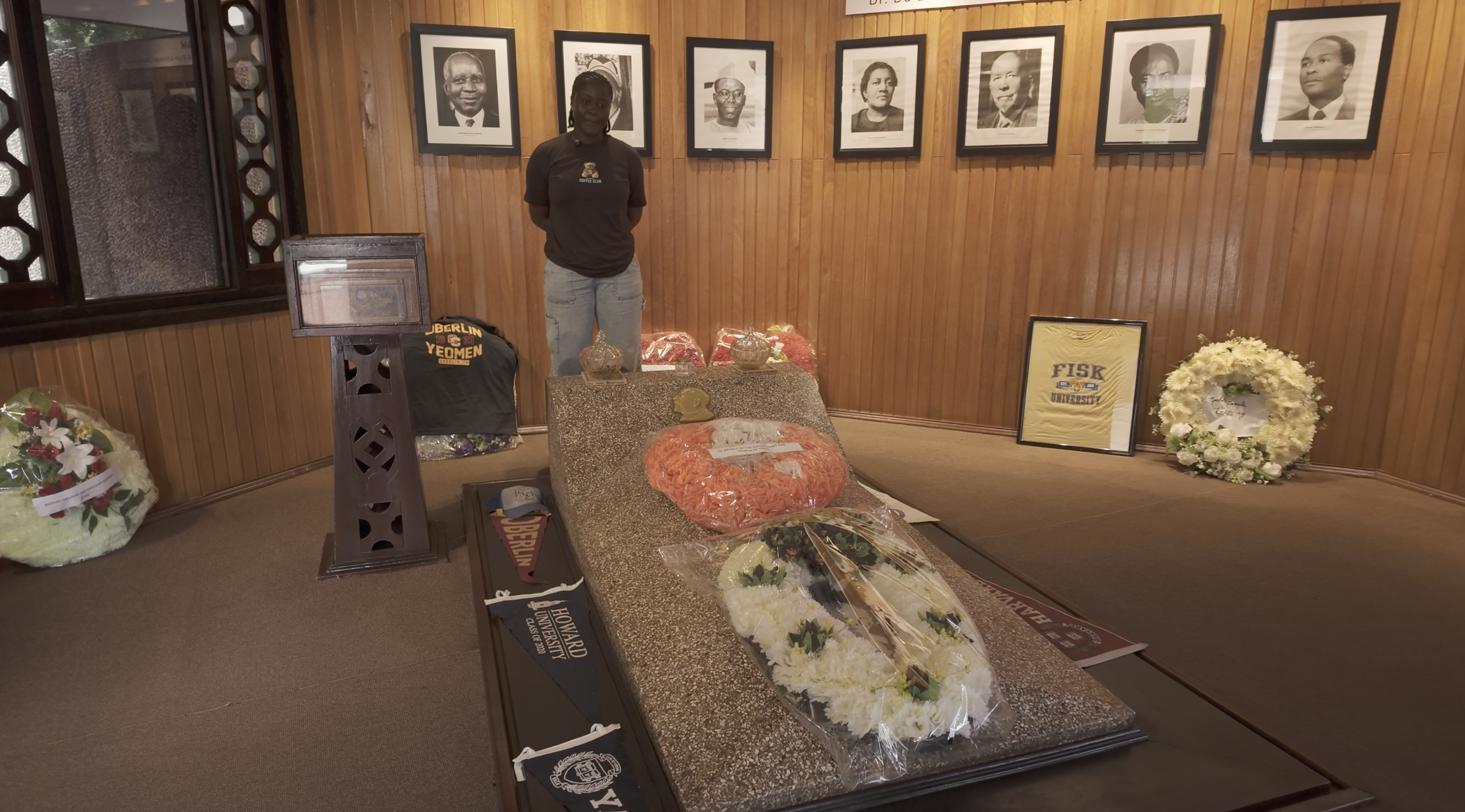
The resting place of W.E.B. Du Bois, W.E.B. Du Bois Memorial Centre for Pan-African Culture, Accra, Ghana.
Next door to his resting place is the photo exhibit, which traces his entire life: the scholar, the founder of the NAACP, the Pan- Africanist, the man who crossed the Atlantic more times than most of his contemporaries could imagine, building relationships with the people he believed could help liberate Black folks from Western domination. And near the end of that exhibit, framed behind glass, is a letter of condolence sent upon his death in 1963 — not from an American dignitary, but from the Chinese government.
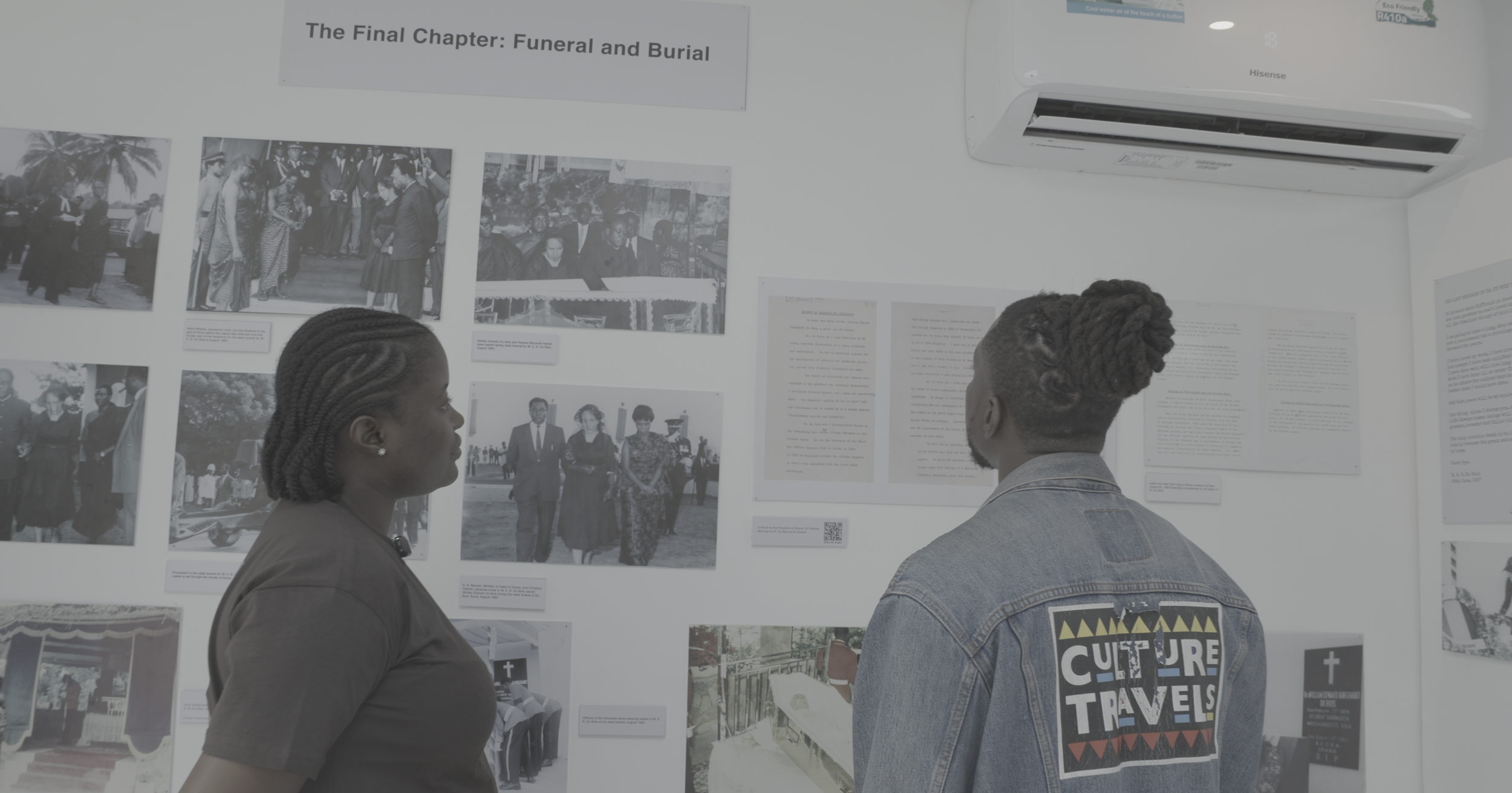
Inside the photo exhibit at the W.E.B. Du Bois Center, tracing a lifetime spent building bridges around the world.
"Upon learning with grief the news of the death of Dr. Du Bois, I wish to extend to you my deep condolences," the letter reads, sent on behalf of Chairman Mao Zedong. "Dr. Du Bois was a great man of our time. His deeds of heroic struggle for the liberation of the Negroes, and the whole of mankind, his outstanding achievements in academic fields, and his sincere friendship toward the Chinese people will forever remain in the memory of the Chinese people."
Standing there, reading those words, I couldn't stop thinking about Dave Chappelle.
The Question Nobody Wants to Sit With
When Chappelle walked onto a stage in Riyadh, Saudi Arabia, earlier this year and told audiences "I'll take money from Saudi Arabia any day just so I can say no over here," the backlash was immediate. Critics pointed to the kingdom's human rights record — the murder of journalist Jamal Khashoggi, the criminalization of homosexuality, the imprisonment of women's rights activists — and asked how a comedian who once walked away from $50 million on principle could now perform for a government responsible for so much documented harm.
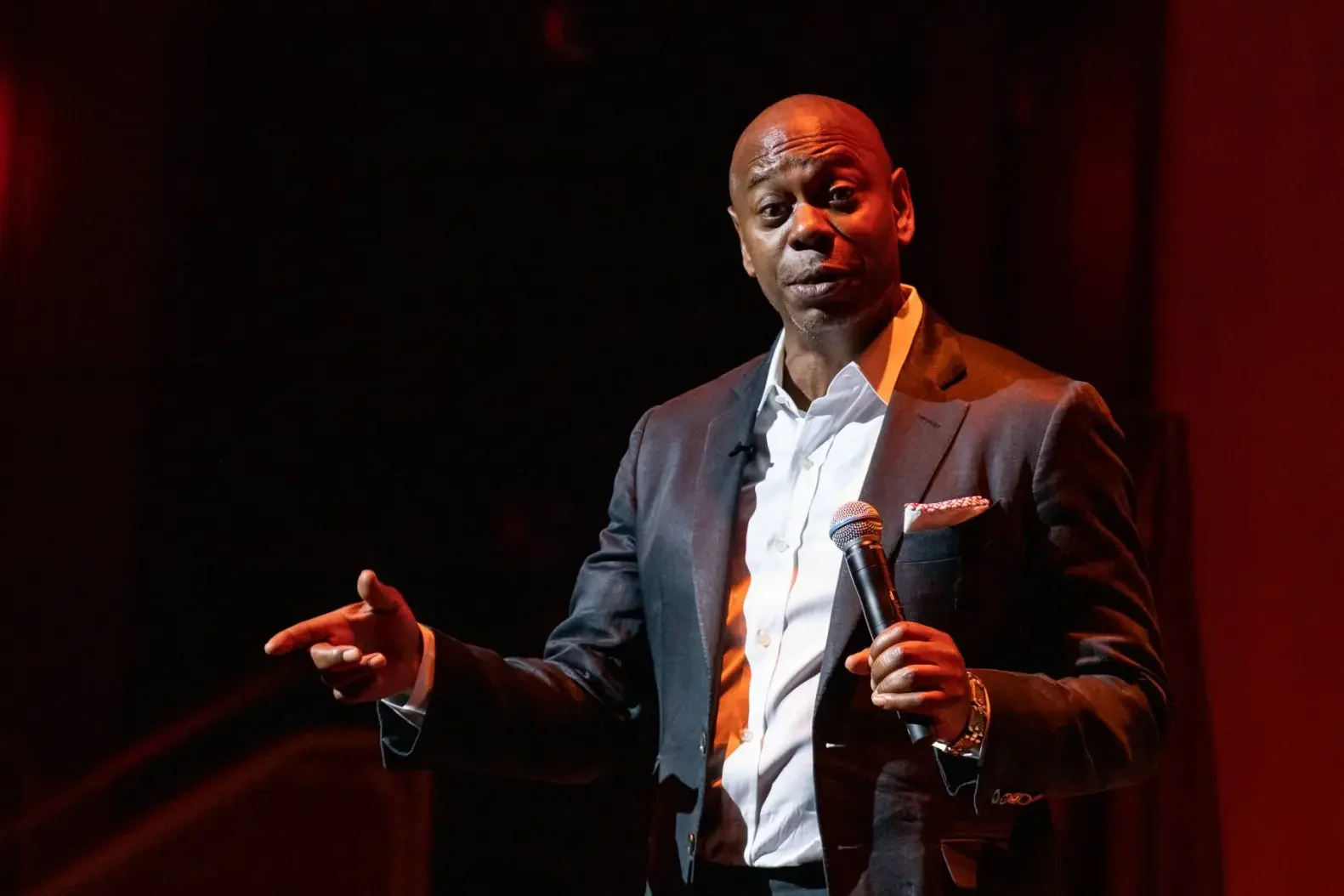
It's a fair question. But it's not a new one. And standing in a museum built for a man who called Chairman Mao a friend, I started to wonder if we've been asking it selectively.
Because Du Bois wasn't the only one. Malcolm X built relationships with governments the West considered enemies. The Black Panther Party took explicit political positions against Israel decades before it was fashionable to do so. Vicki Garvin taught in China during the Cultural Revolution, one of the most violently repressive periods in modern history. And even the NAACP - the organization Du Bois himself founded — accepted funding from the Jewish American community with strings attached: strings that, for a time, dictated what Black Americans could and couldn't say about Israel.
This isn't a story about defending Dave Chappelle. It's not a story about condemning him either. It's a story about a much older pattern - one where Black American leaders, denied full liberation at home, went looking for allies wherever they could find them, and had to decide, again and again, what they were willing to overlook in exchange for support.
Du Bois and Mao: An Uncomfortable Friendship
Du Bois's relationship with Mao Zedong wasn't casual. He visited China twice, in 1936 and again in 1959, and Mao personally received him. The two men developed what historians describe as a genuine friendship — one Du Bois maintained even as reports of the human cost of Mao's policies, including the tens of millions who would die from hunger and famine under the Great Leap Forward, began circulating.
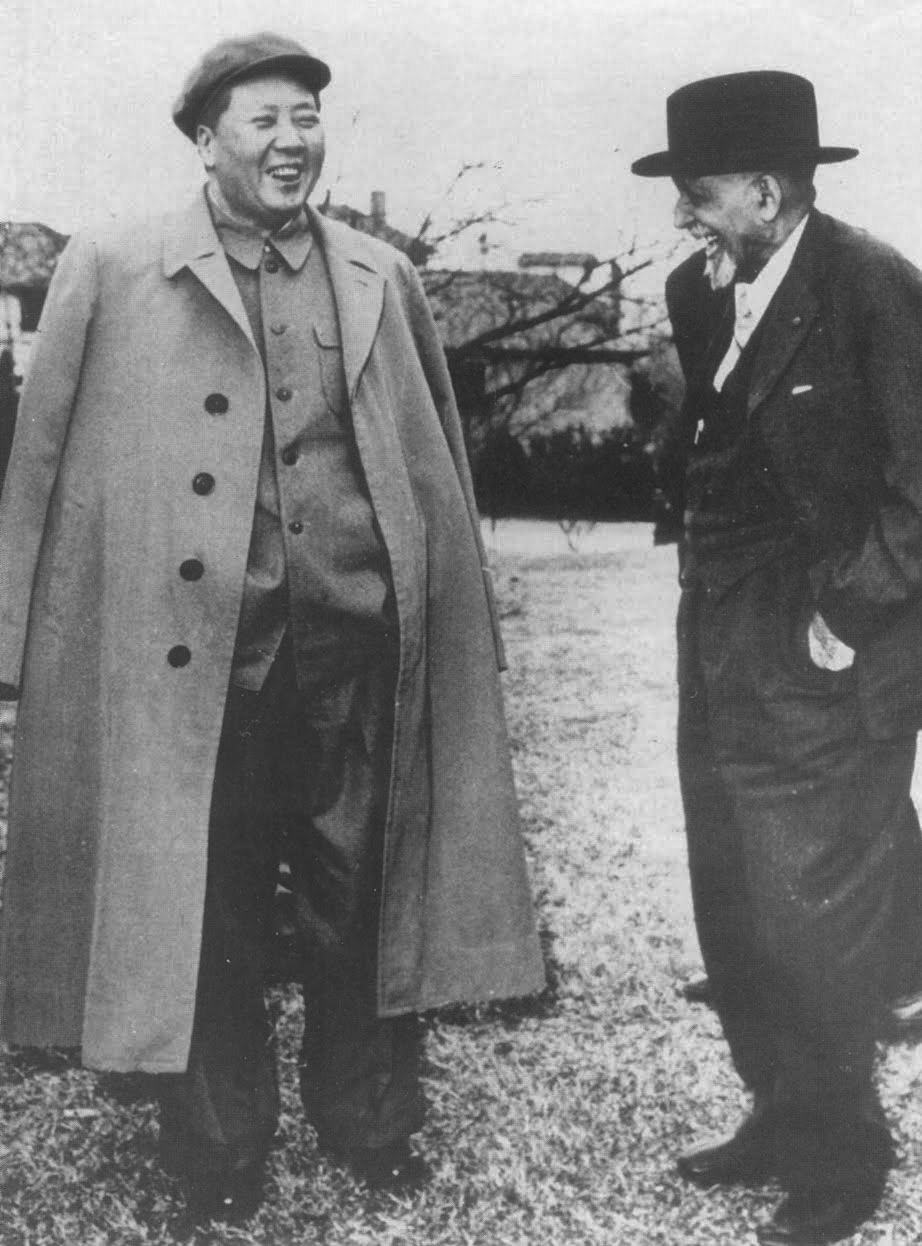
W.E.B. Du Bois and Chairman Mao Zedong, China.
Why would a man who had spent his life documenting the brutality of white supremacy align himself with a leader responsible for so much death among his own people?
The answer, at least in part, is that Du Bois saw in Mao's China something he couldn't find in America: a global power willing to stand publicly against Western colonialism and racial hierarchy. China offered rhetorical and material solidarity with the decolonization movements sweeping Africa and Asia. For a man exhausted by decades of fighting Jim Crow and watching the U.S.government surveil and harass him for his politics - Du Bois would eventually be indicted, though not convicted, under McCarthy-era suspicion of being a foreign agent China's friendship wasn't really about China. It was about finding a great power willing to say, publicly, that Black liberation mattered.
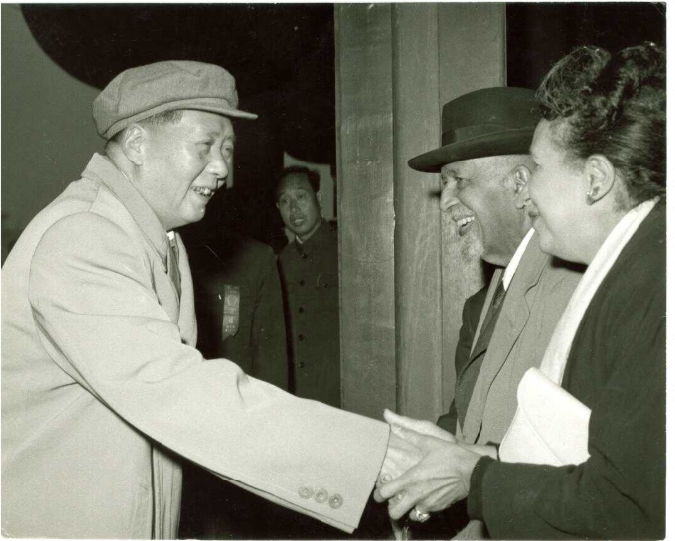
Mao Zedong greets Shirley and W.E.B. Du Bois during their visit to China.
Whether that friendship required him to look away from what was happening inside China is a question historians still debate. Du Bois himself wrote admiringly of what he saw as Chinese progress under Mao. He wasn't naive to suffering - he had built his entire career documenting it. But he made a choice about which suffering to center in his writing, and which to set aside.
In a speech at Peking University on February 23, 1959, Du Bois made his position unmistakable: "Africa, arise, and face the rising sun. China is flesh of your flesh and blood of your blood. No nation on earth ever received from another such help as Communist China is giving Africa today. Come to China, Africa, and look around."
Vicki Garvin and the Cultural Revolution
Vicki Garvin's story follows a similar arc, decades later. A labor organizer and Pan-Africanist who had worked closely with Malcolm X before his assassination, Garvin left the United States in the 1960s, eventually settling in China, where she taught English from 1964 to 1970 - spanning the early, most violent years of the Cultural Revolution.
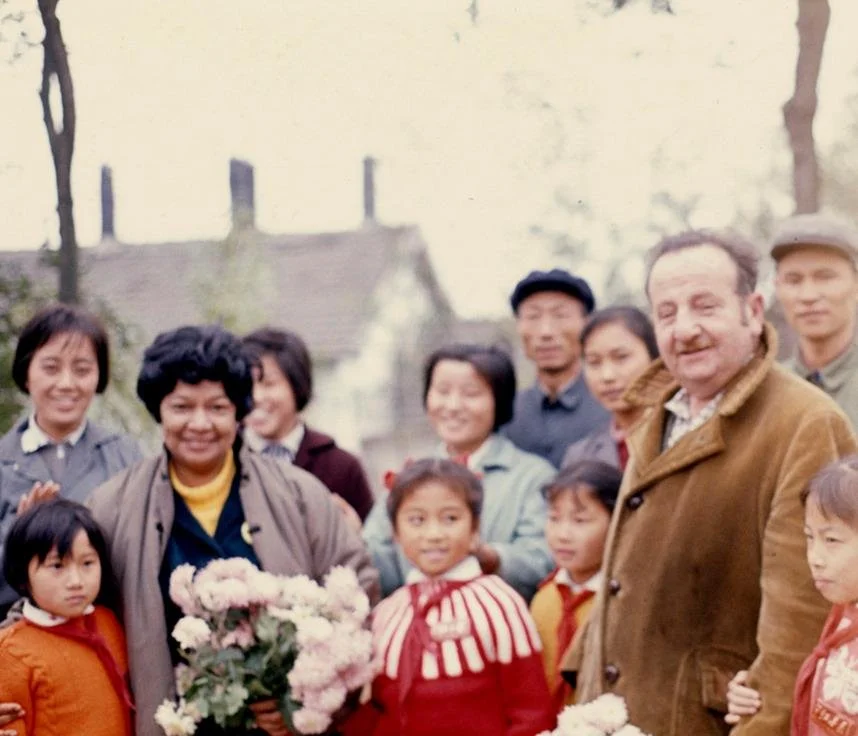
Vicki Garvin in China, where she taught English from 1964 to 1970.
While living in China from 2016 to 2018, I read Yu Hua's novel To Live, and I learned that this was the period when the Red Guards, mobilized by Mao to root out perceived enemies of the revolution, targeted intellectuals, teachers, and anyone deemed insufficiently loyal to the Party.
Estimates of the death toll from the Cultural Revolution range into the hundreds of thousands, if not millions, with countless more imprisoned, tortured, or driven to suicide.
Garvin lived and worked inside that system. Like Du Bois, she found in China a government publicly committed to anti-imperialism and racial solidarity with the developing world even as it was, simultaneously, turning that same machinery of ideological purity against its own people.
It's worth asking, the same way we've asked about Chappelle: did Garvin turn a blind eye? Did she know, and choose silence? Or did she, like so many before and after her, calculate that the value of that alliance—the platform, the solidarity, the escape from American racism outweighed the discomfort of what she witnessed?
Malcolm X's Farewell in Ghana
In her memoir All God's Children Need Traveling Shoes, Maya Angelou — who was living in Accra during Malcolm X's visit to Ghana in 1964 — describes a diplomatic tour that reads almost like a survey of Cold War geopolitics. Malcolm had just returned from Mecca and stopped in Cairo to meet with Egyptian government officials, then traveled to Nigeria to confer with other African politicians. As Angelou writes, he needed "as many governmental contacts as possible so that when he took the case of the Black American before the general assembly of the United Nations, he could be sure of some African and Arab national support."
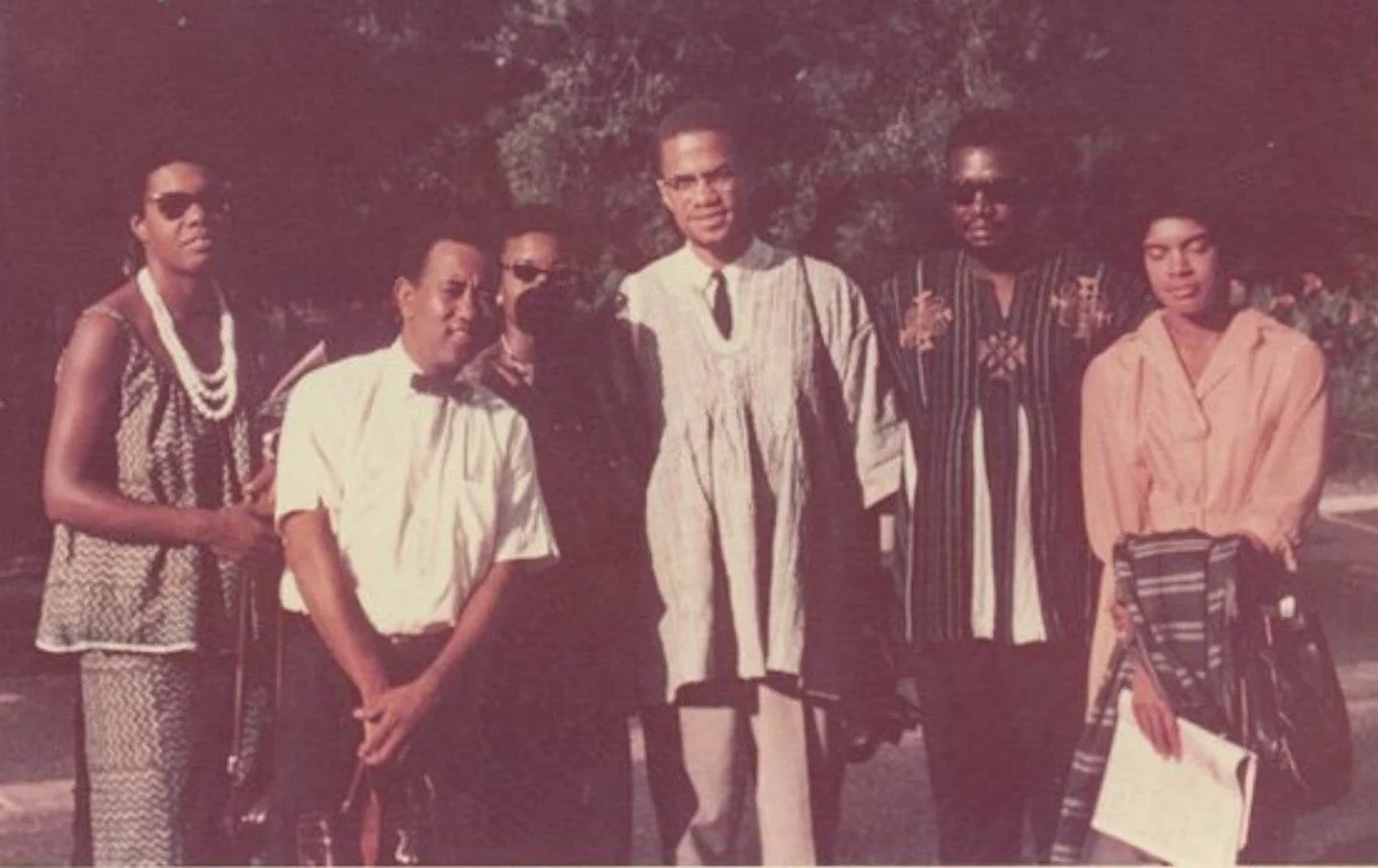
Black expats living in Ghana gather with Maya Angelou and Malcolm X, Accra, 1964.
His final night in Ghana, Angelou describes a residence filled with music and light, a party matching the mood of the room. The Cuban ambassador and his wife sat in close conversation with Malcolm. A Nigerian diplomat mingled nearby. And when it came time for Malcolm to leave for the airport, ambassadors from China, Guinea, Yugoslavia, Mali, Cuba, Algeria, and Egypt all arrived to wish him well and escort him personally. Those who couldn't make it sent word that national matters had detained them. Even in absence, they made sure he knew. That's the kind of respect these leaders held for Malcolm X.
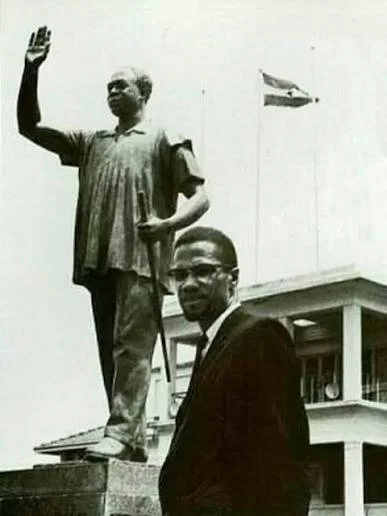
Malcolm X in front of the Kwame Nkrumah statue, Accra, Ghana.
Consider what was happening, politically, inside several of those countries at that exact moment in Guinea, for instance, President Sékou Touré's government was already constructing what would become Camp Boiro, a detention facility where thousands of perceived political opponents would be imprisoned, tortured, and killed over the following decade. Was Malcolm X aware of this? If so, what did he think? Did he ever voice opposition to it, publicly or privately? Or did he, like Du Bois with Mao, calculate that the support of a president like Touré outweighed whatever was happening inside that president's own borders?
The Black Panthers, Israel, and the Price of American Allyship
This same tension played out closer to home, and along different lines. In Black Power and Palestine: Transnational Countries of Color, historian Michael Fischbach documents how, during and after the 1967 Arab-Israeli War, Black political organizations found themselves navigating a minefield of competing loyalties.
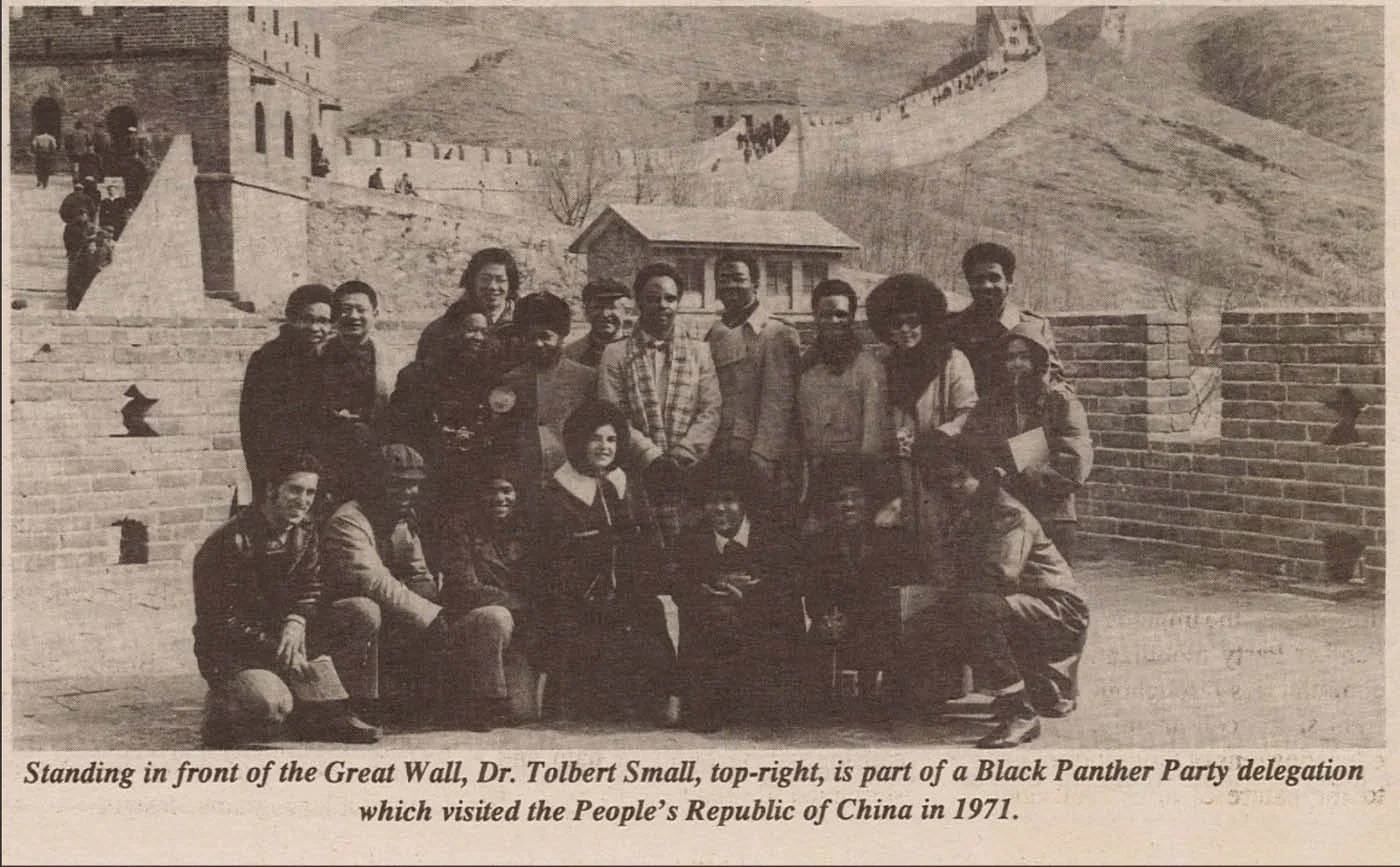
A Chinese newspaper clipping documents the Black Panther Party delegation's visit to China.
The NAACP - the organization Du Bois helped found had received significant financial support from the Jewish American community for decades. That support came with expectations. Fischbach's research shows that Black civil rights organizations dependent on Jewish
philanthropy faced real pressure to avoid public criticism of Israel, particularly around the 1967 war, or risk both financial and political consequences.
The Black Panther Party took the opposite approach. Vocally anti-Zionist, the Panthers aligned themselves with Palestinian liberation as part of a broader anti-colonial, anti-imperialist worldview, the same worldview that led party members to build relationships with Cuba, China, and other governments willing to arm or platform Black revolutionary movements. It cost them. It was one more reason, among many, that the U.S. government treated the Panthers as a threat to be dismantled rather than a civil rights organization to be negotiated with.
What emerges from this history is a split that still echoes today: Black Americans more institutionally aligned with mainstream American power structures tended to avoid criticizing Israel, out of financial and political necessity. Black Americans in more revolutionary, internationalist movements tended to see solidarity with Palestine — and with any nation positioning itself against Western imperialism as inseparable from their own liberation struggle.
Neither position was free of compromise. Both came with a price.
What This Means for Chappelle — and for Us
None of this excuses what's happening in Saudi Arabia, any more than Du Bois's friendship with Mao excuses the Cultural Revolution, or Malcolm X's diplomatic tour excuses Camp Boiro or whatever else was unfolding simultaneously inside Mali or Cuba in 1964. That's not the point of laying these histories side by side.
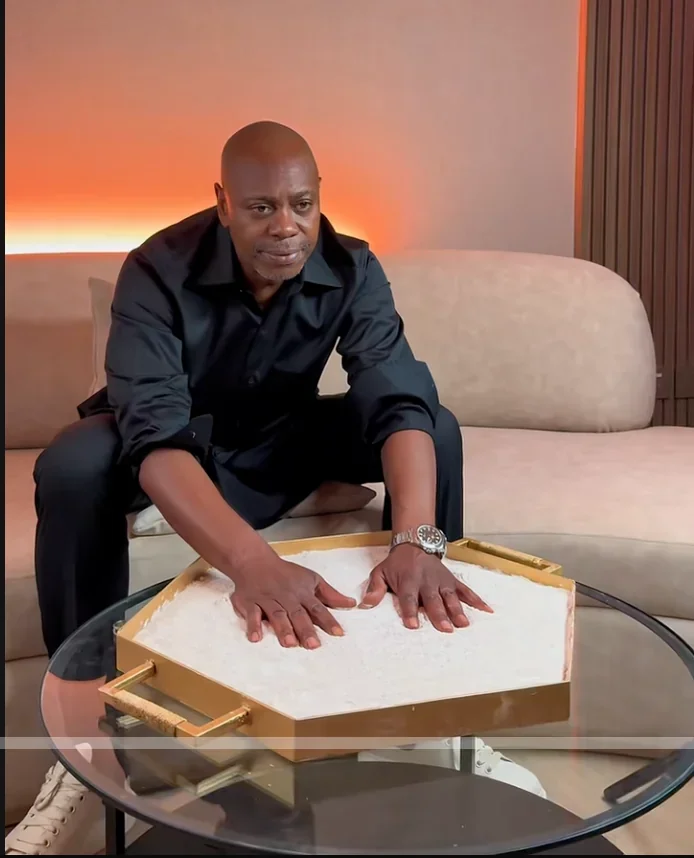
Dave Chappelle in Saudi Arabia.
The point is that this is not new. Black American leaders denied full economic and political
liberation at home, surveilled and harassed by their own government for daring to organize, boycotted from certain markets and shut out of others — have spent over a century looking outward for allies willing to say, publicly, that their liberation mattered. Often, those allies came from nations the West had already decided to villainize: China, Cuba, various African and Arab states during their own revolutionary or authoritarian periods.
Was that pragmatism? Hypocrisy? Both? The uncomfortable truth is that it was probably some of each, every time, for every leader named in this story — and that discomfort doesn't have a clean resolution.
So when Chappelle says he'll take Saudi money "just so I can say no over here," critics point out the contradiction of accepting funding from a government that persecutes women and LGBTQ people. It's a fair critique on its face. But I think what Chappelle is actually getting at is something closer to this: he'd rather take money from Saudi Arabia than take it from white America, because white money has always come with its own strings attached — a means of control, a form of power
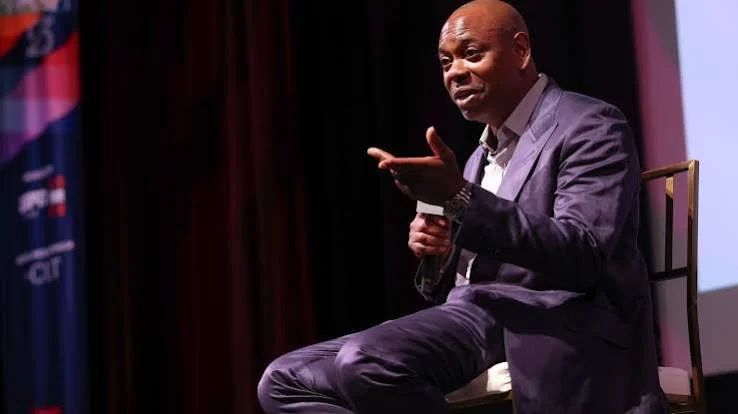
exercised over what he's allowed to say, what he's allowed to joke about, who he's allowed to offend. If we already accept money from a system that oppresses and dehumanizes us here at home, he seems to be asking, how is that fundamentally different from taking money from Saudi Arabia? He's asking a question about us - about what we've already normalized, and why one form of compromised money gets a pass while another doesn't.
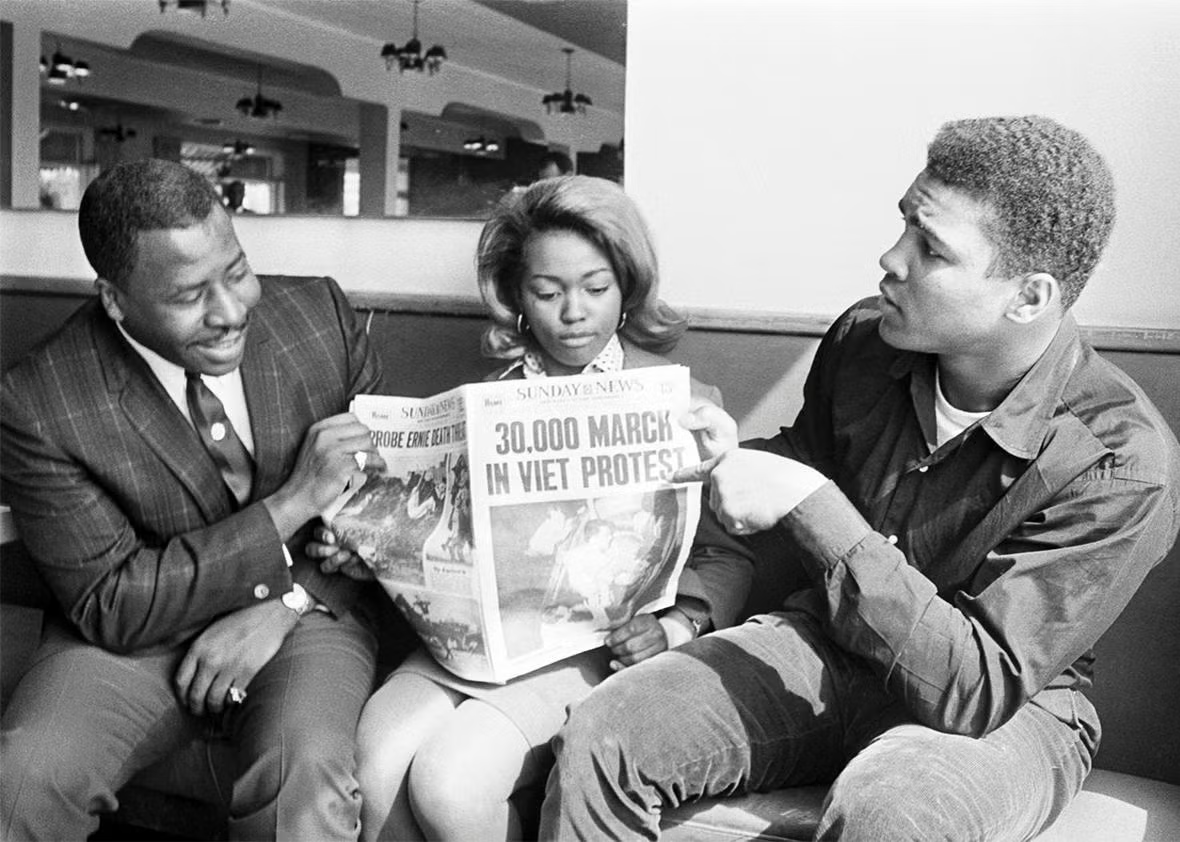
Muhammad Ali holds up a newspaper about the Vietnam War.
The logic echoes Muhammad Ali's refusal to be drafted into Vietnam in 1967. Ali's reasoning was never really about Vietnam, it was about who had actually wronged him. He pointed out that no Viet Cong soldier had ever called him a slur, lynched him, or oppressed his people. The people ordering him to kill strangers overseas were the same people oppressing him at home. Chappelle's framing carries a similar tone: the Saudi government has never personally wronged him or his people, while white American institutions have, repeatedly, his whole life. It's a compelling point. It's also worth pressing on, because Saudi Arabia does have its own victims, even if Chappelle isn't one of them.
The question this history leaves us with isn't whether that calculation is right or wrong. It's whether we, today, are willing to sit with the same discomfort our leaders sat with — the discomfort of building global solidarity in the interest of our own liberation, while knowing that solidarity may require looking past atrocities happening to someone else.
Standing in that museum in Accra, reading Mao's condolence letter to a dead scholar he clearly admired, I didn't find an answer. I found a mirror - one that's been reflecting the same difficult question back at Black America for over a hundred years, long before anyone had heard of Riyadh, or Netflix specials, or the particular controversy of the week.
What are we willing to accept from the people willing to stand with us - and what does that acceptance cost the people they're standing on?