By Chilaeya Ezell-Adams
Culture Travels Magazine
My husband and me, the Caribbean Sea, and a jar of Murray's
On the last night of our eight-day sail through the Caribbean Sea, my husband Leroy and I were invited to sit at the Captain's Table for our final dinner. As we took our seats, the unmistakable yellow label of the four-ounce jar of Murray's beeswax greeted us from Leroy's chair. Pulling out his own chair next to us, Nico, our Cruise Director, winked at me – I gave a slight nod and chuckled.
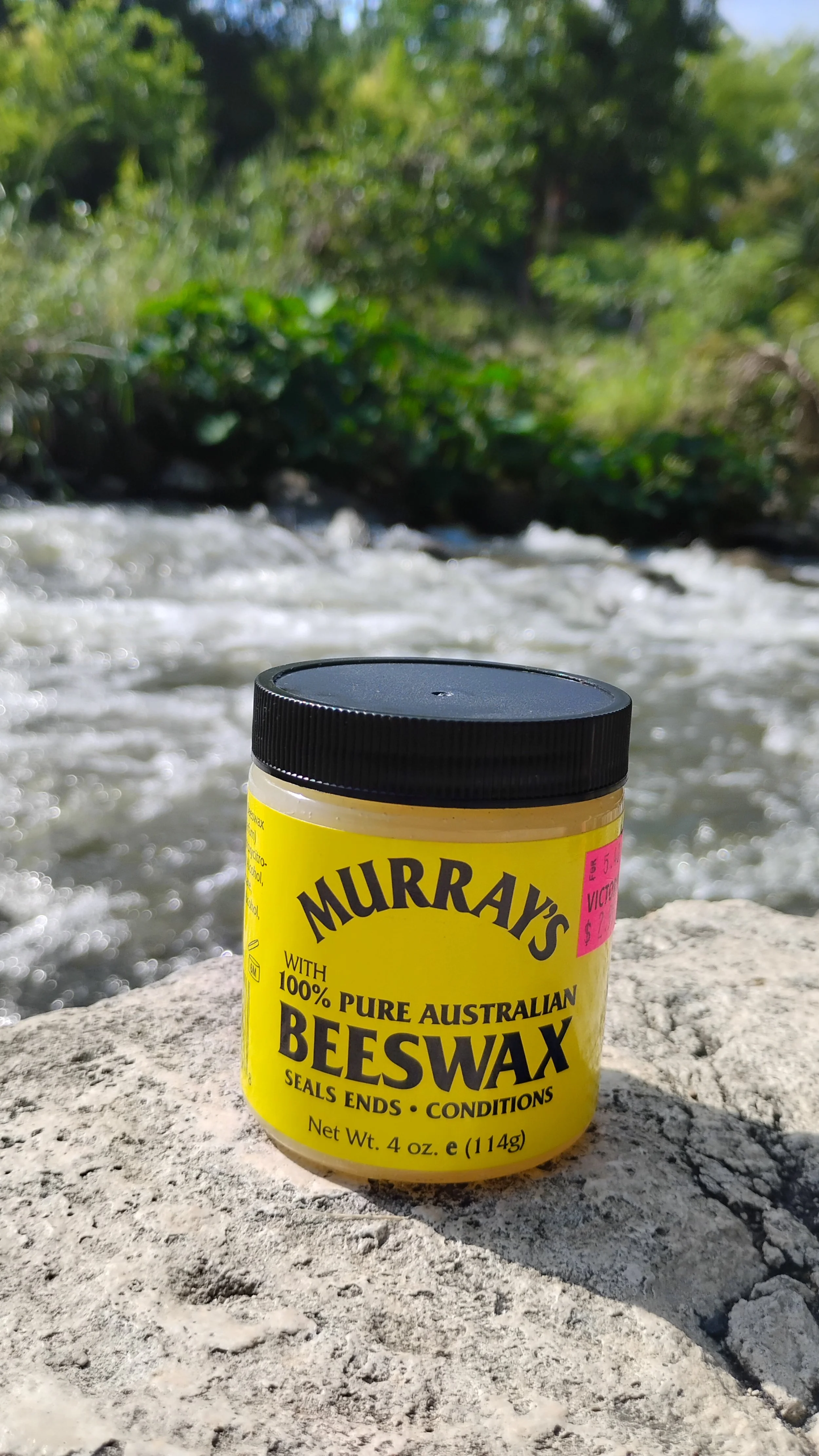
Earlier that day, Nico shared with us how he came to own that very jar of Murray's beeswax. "I was looking for something that would hold my hair better." His previous haircare products, he shared, were no match for the windy seas, and someone working at one of the ports suggested beeswax. He'd learned that beeswax is often used in the hair-locing process, and if beeswax can hold locs, certainly it would work in his hair. And it did work … a little too well. "My hair feels like a helmet and it is impossible to wash out," he confessed. Then, Nico cautiously asked, "Would you find it offensive if I offered it to you?"
His caution revealed his awareness of and sensitivity to the fact that in a sea of White, predominantly German, passengers, Leroy and I were the only Black people. Even taking into account the staff, we were the only Black people on board the ship. Yet we weren't offended by Nico's offer – quite the contrary. It was accepted with humor and appreciation. Because where safety is prioritized, where compassion is intentional, and where gemütlichkeit* is genuine, curiosity does not create walls of offense; it opens doors to community and friendship.
Gemütlichkeit is a German word used to convey the idea of a state or feeling of warmth, friendliness, and good cheer.
Sailing with Sea Cloud: What You Need to Know
First things first, let's answer some practical questions.
Who is Sea Cloud Cruises?
A German-based company, Sea Cloud Cruises began over 90 years ago with their first ship, the Sea Cloud. Built originally as a private luxury yacht for heiress Marjorie Merriweather Post, who was given free rein to bring her desires of glamour to life, it was the largest private yacht in the world at the time of its 1931 maiden voyage. Sea Cloud Cruises embraces gentle tourism, meaning as often as possible, they sail. In their own words, "instead of fighting the sea with engine power, we use the wind whenever possible to get where we need to be" – proving that care for the environment and unique experiences are not mutually exclusive.
Most cruises range from 7 to 10 nights, typically sailing throughout Europe in the summer and the Caribbean and Central America in winter, although there are both shorter and longer cruise options available. Some of their longer cruises include their transatlantic crossings, like their 17-night Dream of a Lifetime: Atlantic Crossing in November, or sailings of the Caribbean Sea, such as their 15-night Sailing on the Trade Winds in December.
Leroy and I sailed on the Sea Cloud Spirit, a three-mast full-rigged ship. The largest in the fleet, the Sea Cloud Spirit only holds up to 134 passengers (the Sea Cloud and the Sea Cloud II hold 64 and 94 passengers, respectively). Their small size is intentional. It allows for greater maneuverability, which means we, as guests, can sail off the beaten track. In addition to popular sailing destinations, Sea Cloud's "private yachts" are able to call at small, more individual ports. For example, our cruise included a day in the San Blas Islands of Panama – which aren't accessible by your typical commercial cruise ship.
How Much Does a Sea Cloud Cruise Cost? While Sea Cloud Cruises offers special sailings – such as their culinary or music cruises – it appears the greatest factors on price are cruise duration and destination. Prices tend to range from a starting price of roughly $5,000 to $11,000 per person. Their current cruise calendar also includes several options starting as low as $3,400 per person.
What's Included? All meals are included. On our trip aboard the Sea Cloud Spirit, this included an early-riser breakfast of pastries and fruit (similar to a light continental breakfast offered at most US hotels), a main breakfast buffet, lunch buffet, four-course dinner, and a late-night snack. Lunch and dinner included unlimited options of wine and beer; coffee, teas, and water (both still and sparkling) were available at no cost throughout the day. You will be fed and hydrated aboard Sea Cloud. Gratuities are also included.
What's Not? Wi-Fi, laundry service (except for suites), beauty and wellness treatments, shore excursions, and boutique purchases are available at an additional charge. Most ports within our trip included multiple excursion options ranging in cost from €69.00 ($79 USD) for a bus tour through the Aruban landscape to €275.00 ($314 USD) for a full-day boat trip through Colombia's Islas del Rosario.
When Can You Go? Anytime! Sea Cloud Cruises' calendar currently has trips available through March 2028.
https://www.seacloud.com/en/cruise-search/?action=search&pm-ot=2388&pm-l=3,12000
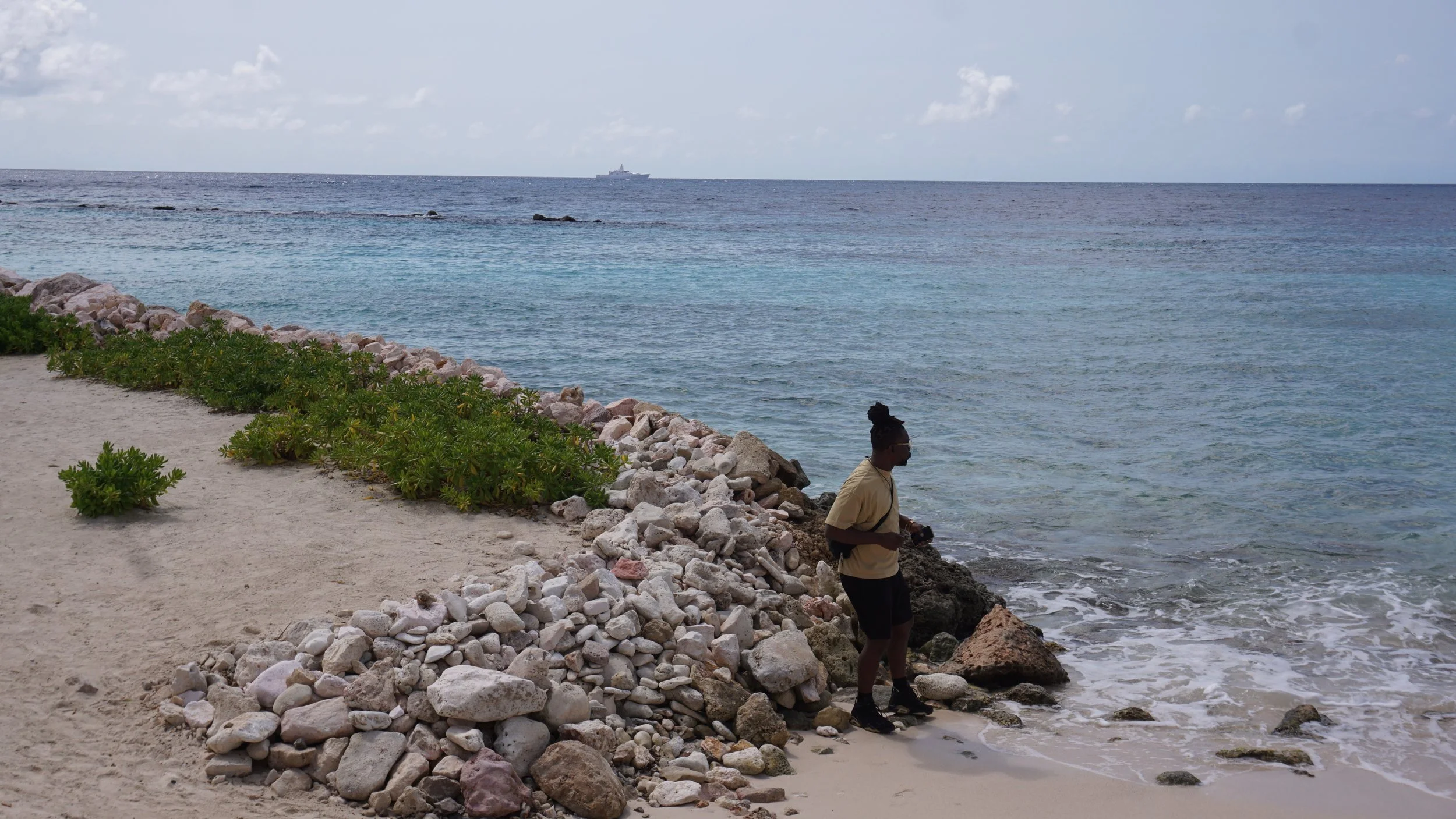
Not Quite the Black Pearl: My Sea Cloud Experience
Leroy and I were invited to join Sea Cloud's Just Drifting Along cruise – an 8-night cruise through the Caribbean Sea aboard the youngest and largest of their fleet, the Sea Cloud Spirit. The journey began with embarkation from Curaçao; made port in Bonaire, Aruba, Colombia, and Panama; and included two full days of sailing. In total, we traveled 871 nautical miles (or approximately 1,002 miles), which we learned was, at that time, their longest voyage undertaken.
Like our AmaWaterways Soulful Experience, from which we'd returned less than two months prior, this trip included several firsts for us. While Leroy had previously vacationed in Colombia and I in Aruba, both of those trips were taken before we'd met and were taken with friends. Experiencing them together as a married couple would be a new adventure. Neither of us had been to the other countries. We didn't know any Black people who had been sailing, let alone what a windjammer was. We don't speak German, not even common phrases.
And yet, by the time we disembarked in Panama, we'd added five countries to the Adams Family travel log, had each earned a Certificate of Achievement certifying we'd "successfully participated in Climbing the Rig" (signed by the captain, might I add), and were bilingual pirate shanty singers.
Curaçao: An Ancestral Sendoff
Our Sea Cloud experience began in Willemstad, Curaçao before ever setting foot on the ship.
Colonized first by the Spanish, followed by the British and then the Dutch, Curaçao has a history of European colonization and was a hub of the transatlantic slave trade. To date, the island country remains a self-governing constituent of the Kingdom of the Netherlands; however, its African influences remain woven throughout the port town.
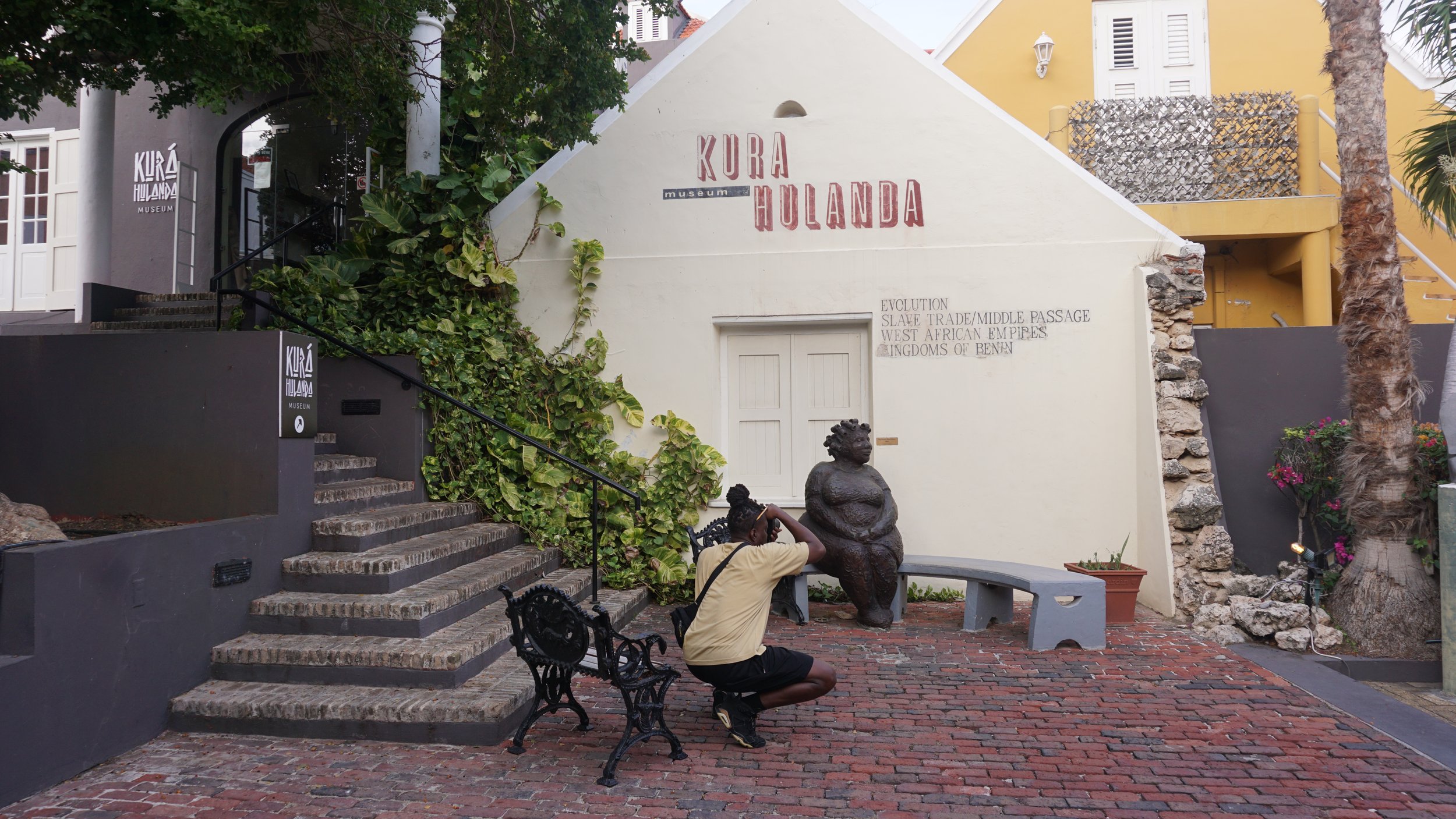
In the café of the Marriott Bonvoy, where we stayed overnight before embarkation, a mural of a Black woman smiled at passersby, welcoming them with a papaya. The next day, a 15-minute walk took us from our hotel to El Patron, a hole in the wall, community beloved - evident by the long line - restaurant. We had a delicious plate of tender ribs with wings and sweet plantain fried perfectly. Someone's aunt and uncle were in that kitsch throwing down. Battling the few flies outside was worth this meal and the scenery of regulars visiting their favorite restaurant for their favorite meal makes them forget, for a delicious moment, about that job waiting for them. After lunch, we walked past the Kurá Hulanda Museum – founded in 1999 by Jacob Gelt Dekker, a Dutch philanthropist, to confront the history of the transatlantic slave trade. The museum is set across several historic buildings which were once part of a slave-trading post.
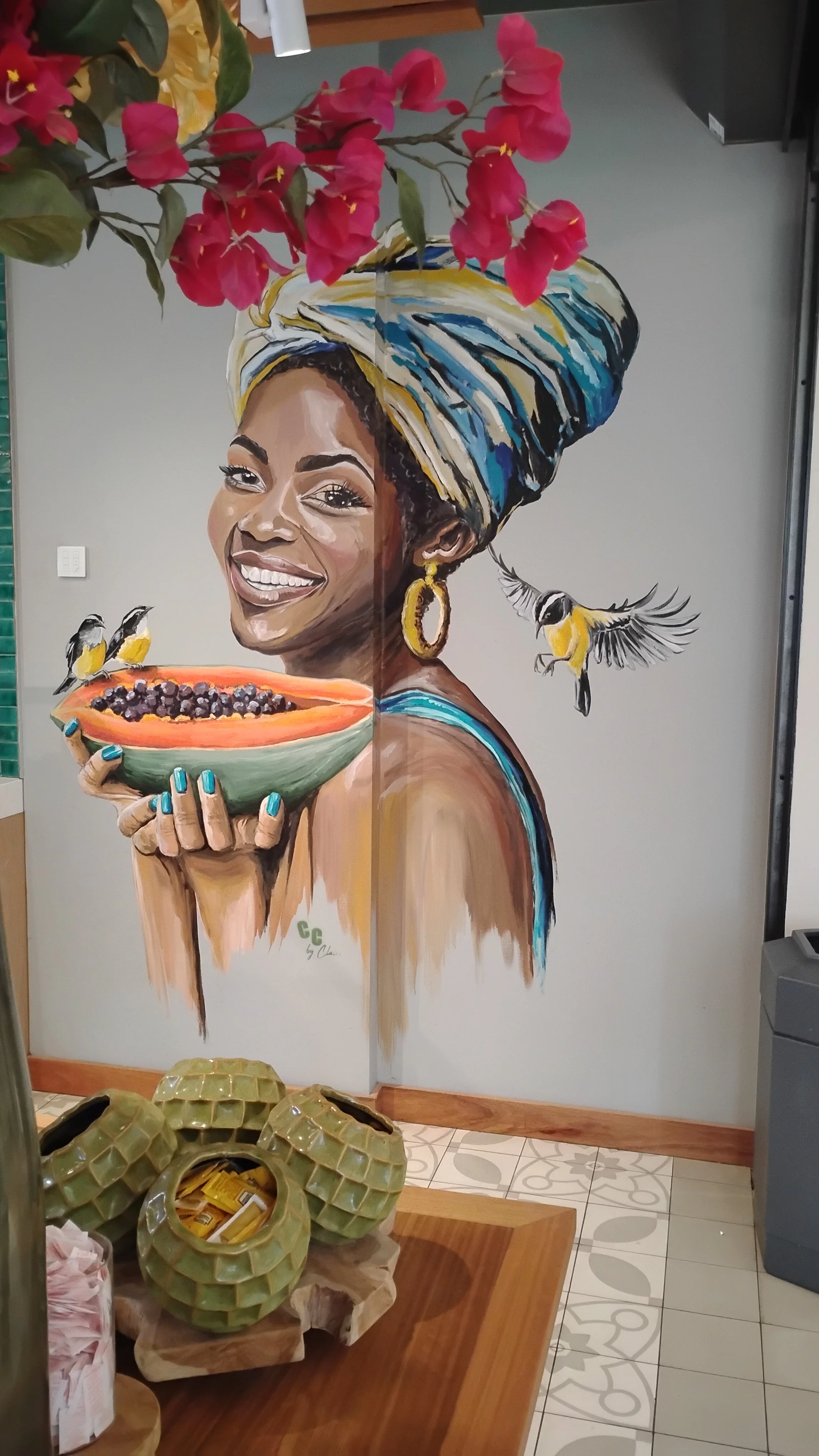
Blackness was everywhere. We were surrounded by murals across residential and commercial buildings alike. The street art beckoned to be engaged with. One of the "Balanceando con mis Cosas" (Balancing with my Things) sculptures, created by Surinamese artist Carlos Blaaker, looked upon us from across the street when we arrived at the port. I like to imagine there was pride and awe in her eyes as she watched us board the Sea Cloud Spirit.
Yo Ho! Yo Ho! A Sailor's Life for Me: The Sea Cloud Spirit
In a word, the Sea Cloud Spirit is breathtaking. The ship's white exterior gleamed against the bright blues of the water and sky; her wooden masts adorned with an incalculable number of ropes, holding taut. Polished wood with gold accents and royal blue carpets composed the majority of the ship's interior. Our room was no less beautiful and also included a balcony from which we watched dolphins and flying fish on more than one occasion.
Trips are shaped not only by our destinations or accommodations but also by the people we encounter. Knowing Sea Cloud Cruises is based in Germany and given the demographics amongst similar cruise lines, we'd estimated we'd likely be amongst the youngest and one of the few Americans aboard – we were correct on both counts. My initial concerns about possible language barriers were unfounded, though, as the Sea Cloud Spirit staff were wonderful and ensured that all guests, no matter their native tongue, received all information and were supported at all times. All onboard announcements were made in German and English; printed materials and excursions were also available in both languages.
We had also assumed there was a high likelihood that there would be few other Black people onboard. There were none. But while, sure, we "stuck out in the crowd," this never presented as an issue. None of the guests avoided us or were rude; none approached us with an air of fetishization or speculation. The culture of kindness and care set by the crew was reflected in our interactions with each guest. And because of the intimate guest size, we had a chance to learn about one another and develop relationships that made the entire ship feel like family by week's end. Those who were bilingual, translated conversations for those of us who spoke only one language. We sang and danced together. When I was afraid to climb the ship's rigging, they offered words of comfort; when Leroy made it to the landing they cheered, some even louder than me. We found ourselves spending a lot of time with Dave and Carolann, one of our favorite older couples, with whom we discussed politics and relationships and life.
We felt safe and welcome, both on the ship and off.
Bonaire: The Salt of Our Ancestors
Shortly after arriving in Kralendijk, Bonaire, we joined our guide on the bus taking us on the island tour to the Goto Meer lagoon and its flamingos. Before the lagoon and the flamingos, our tour passed through Bonaire's salt mines.
Like Curaçao and Aruba, Bonaire was colonized by the Dutch and today remains a territory of the Kingdom of the Netherlands. The Dutch, well-known for their salted fish, were extensive users of salt, and when they conquered Bonaire from the Spanish in the 17th century, the island became the center of their salt trade due to its rich salt mines. The mines were worked by enslaved people who lived a short walking distance away in small white huts.
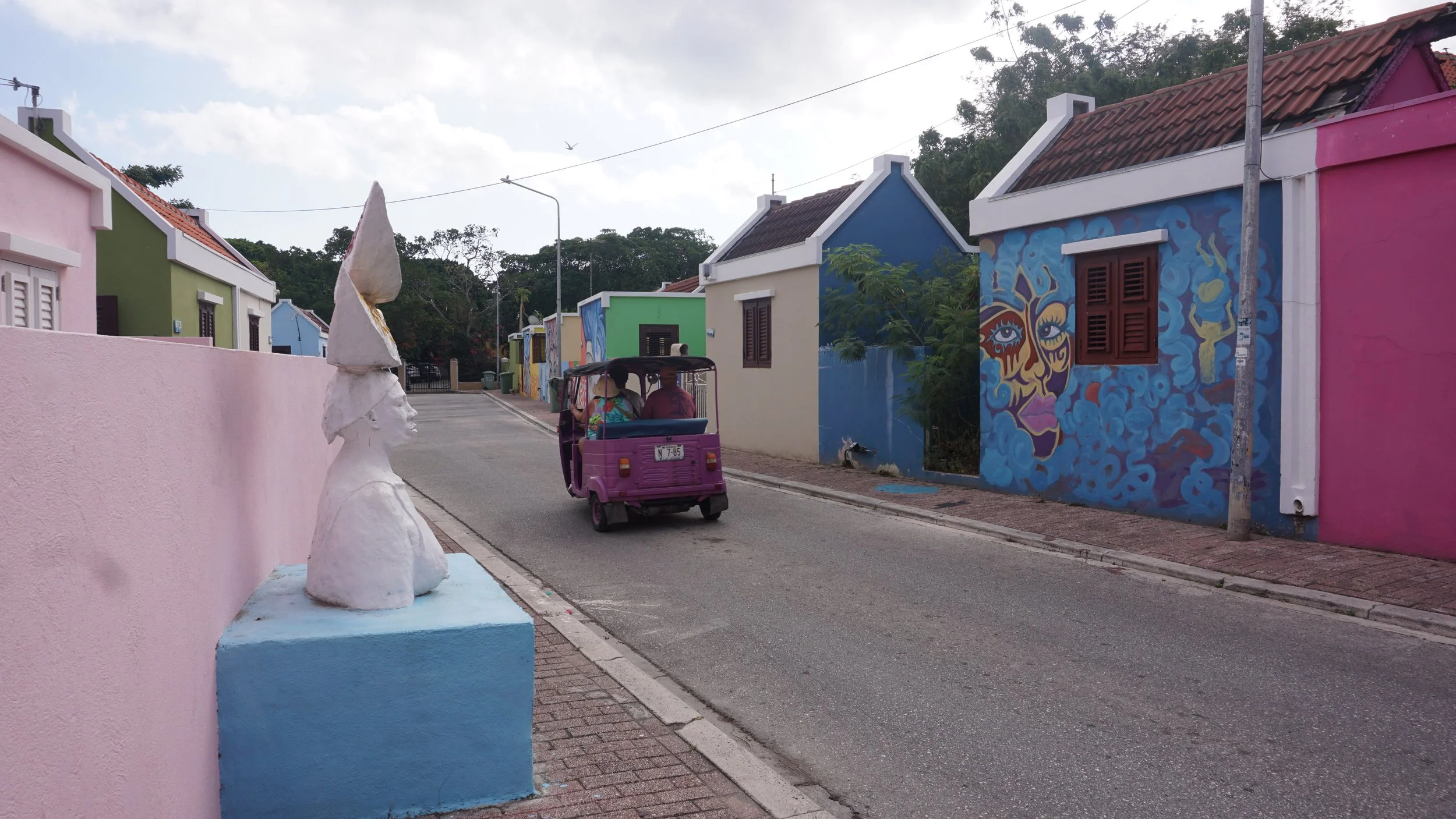
Our tour drove past lines of white salt pyramids, stopping briefly at these huts. They were tiny and there was a heaviness about their beauty; stark white due to the coral they were made of, with dark roofs and holes carved out for windows and a door frame – no doors. The front of each hut faced the ocean. Typically, I associate salty sea air and crashing waves with peace and freedom, but standing amongst these huts I was overwhelmed with despondency. Prior to this tour I was unaware of the blood in our salt. The salty sea air I find solace in today brought captivity to enslaved Black people centuries prior.
Before heading forward on the tour, we had the opportunity to collect large crystals of pure sea salt from a large trough, freshly mined, as Bonaire's salt mines are still functional today. As we waited in line, Leroy and I had an honest conversation about our feelings because, honestly, it felt wrong to dive in and greedily take anything that came from the suffering of our ancestors – no matter how long ago. Carefully, we selected our own crystals, which now sit on our ancestor altar - a sacred space in our home with pictures and symbols honoring those before us - in our home. An homage to those ancestors whose suffering does not go unnoticed and whom we hope, through our own actions, we make proud.
Aruba: Black People Reflected in Black Art
The very next day we enjoyed a street art tour in Aruba where we saw the Red Anchor, a monument dedicated to sailors who died at sea, and enjoyed libations at the popular Rum Reef Bar on Baby Beach.
The majority of the tour was spent in St. Nicolas, walking through the town center discovering an unending supply of vibrant street art. Many pieces displayed Black and Indigenous people amongst the brilliantly colored plants and animals. Art adorned abandoned and active buildings alike. Even the police station was painted intricately.
The details within each piece are evidence of the care taken to reflect back to the audience the beauty of the island's people.
Colombia: Wakanda Forever
Unlike the other ports, which had been only six-hour stops, we spent a day and a half in Cartagena, Colombia – a welcome reprieve after a full day at sea. On our first evening, while my husband enjoyed some solo motorbike riding, I joined a few of our shipmates on a rum and chocolate pairing in town at El Arsenal: The Rum Box. We were generously served a flight of six different rums and two aguardientes, paired with chocolates (processed and made at the neighboring Chocolate Co.) and other small bites.
El Arsenal: The Rum Box is tucked away in the popular neighborhood of Getsemaní. Like Aruba, Getsemaní is blanketed in vibrant art. One would be hard pressed to find an alley, a wall, that wasn't covered in a mural or didn't have a vendor's canvases displayed for sale. Following our respective excursions, we had dinner in Getsemaní and walked the neighborhood streets. They were crowded with people eating, laughing, and dancing – people as loud and brilliant as the artwork around us.
Colonized by the Spanish, Cartagena was one of Spain's largest ports for the trade of enslaved people across colonized Latin America and the Caribbean. Over three centuries, more than a million Africans were taken captive and brought, forcibly, to the city. Their impact is still seen today – from the art lining the streets of Getsemaní to the palenqueras posing for photos and selling fruit to tourists along the beaches and within the city center to the skin of Cartagena's residents.
As we did on the islands of Curaçao, Bonaire, and Aruba, we saw ourselves looking back at us in Cartagena's artwork and in her people. And our presence amongst the passengers of the Sea Cloud Spirit did not go unnoticed. Upon realizing we weren't crew but were passengers ourselves, Black cab drivers and tour guides made statements of awe and gave congratulatory nods of approval. Vendors held their arms next to ours and pointed – "we are the same, we are family." Delivering us safely back to the port, our last cab driver of the trip bid us farewell, crossing his arms across his chest in an 'X' and said, "Wakanda forever."
Would I Recommend Sea Cloud Cruises? Completely.
This experience with Sea Cloud Cruises surprised me. I expected to have a nice time, to try something new, and to eat good food. I expected polite and accommodating crew members. But in a time when Black Americans die or go missing amongst their all-White peer group, I did not expect the genuine welcome we felt while aboard the Sea Cloud Spirit. Our Blackness wasn't a spectacle and our Blackness wasn't feared. And because there was emotional safety onboard, Leroy and I were able to fully engage and absorb the Blackness by which we found ourselves unexpectedly surrounded when on shore. Perhaps you'll find something unexpected too.
Scan below to visit Sea Cloud Cruises' calendar and find an itinerary that is right for you. (https://www.seacloud.com/en/cruise-search/)
References
"Curaçao History". www.curacaohistory.com. Retrieved 11 July 2026.
"KURÁ HULANDA MUSEUM". www.kurahulandavillage.com/museum/. Retrieved 12 July 2026.
"Sea Salt History". www.bonaireseasalt.com/sea-salt-history. Retrieved 12 July 2026.
Malik, Nesrine (4 February 2026). "'A Small African in Colombia': the palenqueras of Cartagena." The Guardian. Retrieved 12 July 2026.